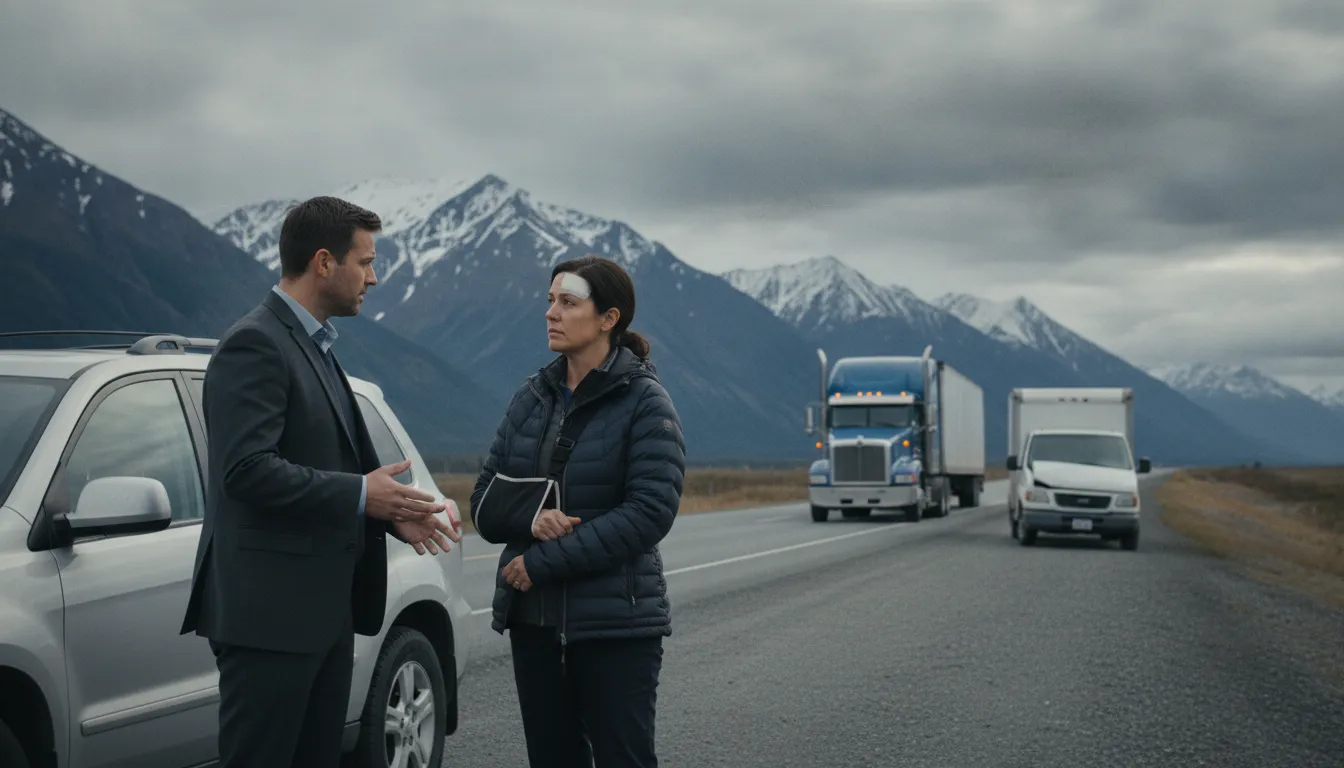
A crash involving a semi-truck, delivery van, or company work vehicle can raise questions that an ordinary car accident may not. The driver, employer, carrier, maintenance provider, cargo loader, or manufacturer may each hold relevant evidence, and more than one insurance policy may apply. Early steps can affect how well those facts are preserved.
Schedule a free consultation. You pay no upfront attorney fees; fees are taken only from a successful recovery.
An alaska commercial vehicle accident attorney can help identify potentially responsible parties, protect evidence, evaluate available insurance, and explain your options after a serious crash. Every claim depends on its facts, the available records, and applicable law.
First, it helps to understand which vehicles and crash circumstances may qualify as commercial vehicle accidents in Alaska, because that classification can shape the investigation from the beginning. The Law Office of Jason Skala, LLC can also help with Anchorage car and truck accident legal claims.
What Counts as a Commercial Vehicle Accident in Alaska?
A commercial vehicle is used in connection with a business, employer, delivery operation, or other commercial activity. The category is broader than a crash involving an 18-wheeler. In Alaska, a commercial-vehicle case may involve a semi-truck, delivery truck, commercial van, company pickup, or a vehicle transporting heavy equipment. The vehicle’s size matters, but so does who operated it, why it was on the road, and how the business maintained and used it.
Semi-trucks and delivery vehicles
A tractor-trailer or other large truck can cause substantial damage because of its weight, dimensions, cargo, and stopping distance. Evidence may include the driver’s qualification and work records, inspection and maintenance history, cargo information, and records held by the motor carrier. These cases can require a closer look at both the driver and the company responsible for the vehicle.
Delivery vans and smaller commercial trucks may create a different evidence trail. A delivery company may have route assignments, dispatch messages, time records, vehicle telematics, and policies governing deliveries. The absence of a large trailer does not determine whether the crash involved commercial conduct or whether an employer may have relevant records.
Company pickups and heavy-equipment transport
A company pickup can be part of a commercial-vehicle claim when an employee is driving for work. The important questions may include whether the driver was working, whether the employer owned or controlled the vehicle, and whether work-related loading or equipment affected the crash. Heavy-equipment transport can add issues involving securing the load, the transport company, and the condition of the equipment or trailer.
Vehicle type can also help guide the investigation into what caused the collision. Documented commercial-crash causes may include driver error or fatigue, poor maintenance, equipment failure, or improperly loaded cargo. Those possibilities do not establish fault by themselves, but they show why a claim should not be evaluated only from the police report or visible vehicle damage.
For semi-truck cases and related evidence issues, see our overview of commercial truck accident cases. A commercial vehicle accident attorney can then assess the specific vehicle, business relationship, records, and injuries involved rather than assuming every commercial crash follows the same process.
Who Can Be Liable After a Commercial Vehicle Crash?
Responsibility after a commercial vehicle crash is not always limited to the person who was behind the wheel. A delivery van, company pickup, semi-truck, or heavy-equipment carrier may involve several businesses and individuals whose roles must be identified before fault can be evaluated. The available evidence, employment relationship, maintenance history, and cargo-handling records can all affect the analysis.
The driver and the employer or carrier
The driver may be part of the investigation when the crash involves unsafe driving, distraction, fatigue, or another alleged error. The employer or trucking carrier may also need to be examined. Important questions can include whether the driver was working at the time. Who hired and trained the driver, who controlled the vehicle, and whether company policies or scheduling played a role. A company may be responsible under one legal theory, while the driver’s individual conduct may be evaluated under another. Those conclusions require a review of the facts rather than an assumption based on the company name on the vehicle.
Maintenance providers and manufacturers
A mechanical problem can raise separate questions about inspections, repairs, replacement parts, and who had responsibility for keeping the vehicle safe. A maintenance contractor or internal fleet department may have relevant service records. If a component failed or a design or manufacturing defect is suspected, the vehicle or part manufacturer may also become relevant. Evidence from the vehicle, repair records, inspection history, and qualified technical review can help distinguish a maintenance issue from an unrelated crash cause.
Cargo loaders and other involved parties
Improperly loaded or secured cargo can shift, fall, or affect a vehicle’s handling. Depending on the evidence, the party that loaded, packed, secured, or directed the shipment may need to be identified. Other businesses may also matter when a vehicle is leased, dispatched by a separate company, or operated under a different carrier’s authority.
These possibilities do not establish that any particular party is liable. They show why a commercial crash investigation may extend beyond an ordinary driver-versus-driver account. A careful review of Anchorage car and truck accident legal claims can help explain how responsibility and evidence are evaluated in Alaska.
What Evidence Matters in a Commercial Vehicle Claim?
Evidence can show what happened, who was involved, and how the crash affected you. Start with photographs of the scene, vehicle damage, road conditions, traffic controls, visible injuries, and any cargo or equipment that appears relevant. If you cannot safely take photographs, ask a trusted person to do so. Do not place yourself in danger near traffic or damaged vehicles.
Witness information can be equally important. Write down names, phone numbers, and a brief description of what each person observed. Keep the incident number and request a copy of any available crash report. Identify the commercial vehicle by its license plate, unit number, company name, trailer number, and any markings. Record the driver’s name and employer if that information is available. Delivery vans, company pickups, and vehicles operated by contractors may not be marked in the same way as a tractor-trailer. So small details can help identify the responsible business and insurer.
Medical records connect the crash to the harm
Get appropriate medical care and tell providers how the injury occurred. Keep discharge instructions, imaging reports, bills, prescriptions, work restrictions, and records of follow-up visits. Medical documentation can help establish the timing and severity of an injury, especially when symptoms develop or worsen after the crash. Keep a simple record of pain, limitations, missed work, and daily tasks that have become difficult. Those notes are not a substitute for medical records, but they can help explain the course of recovery accurately.
Preserve records before they disappear
Commercial-vehicle evidence may include driver logs, inspection and maintenance records, dispatch communications, onboard data, training records, employment information, and cargo documents. Ask the vehicle owner, employer, carrier, or insurer to preserve potentially relevant records. A preservation request does not establish liability, but it can notify the party that evidence related to the crash should not be discarded or routinely overwritten.
For covered motor carriers, federal regulations address subjects such as driver qualification, vehicle inspection, hours of service, and related operations. One rule generally limits a covered driver to 11 hours of driving within a 14-hour window after 10 consecutive hours off duty. The rule and its exceptions do not apply identically to every vehicle or operation. Review the exact language in 49 CFR 395.3, and do not assume that a suspected violation by itself proves fault or liability.
For practical steps after a serious crash, see this guide to protecting an Alaska injury claim. A complete review may require matching the physical evidence, medical records, vehicle identifiers, and carrier records to the specific facts.
How Does Commercial Vehicle Insurance Work in Alaska?
Insurance after a work-vehicle crash may involve more than the policy covering the injured person’s car. A delivery van, company pickup, tractor-trailer, or other commercial vehicle may be insured through an employer, a motor carrier, a leasing arrangement, or another business relationship. The policy language, vehicle use, ownership, and facts of the collision all matter.
Federal rules address financial responsibility for certain covered motor carriers, but they do not make every commercial vehicle subject to the same requirements. Federal minimums and available coverage depend on the vehicle, carrier, cargo, and route. Part 387 of Title 49 addresses financial responsibility requirements, including rules that vary by operation and cargo category: review the federal commercial-carrier insurance rules.
| Potential coverage layer | What it may address | Important question |
|---|---|---|
| Personal auto coverage | The injured person’s vehicle damage or certain first-party benefits, depending on the policy and circumstances. | What coverage applies to the injured person’s own vehicle and losses? |
| Employer or carrier coverage | Claims connected to a commercial vehicle operated for a business, subject to policy terms and liability facts. | Who owned, hired, operated, or controlled the vehicle at the time? |
| Cargo or excess layers | Additional coverage that may relate to the cargo, a specialized operation, or limits above a primary policy. | Does the cargo, route, contract, or excess policy add a relevant layer? |
The table describes possible categories, not a conclusion about coverage in a particular case. A commercial vehicle can be insured under more than one policy, while exclusions, endorsements, employer relationships, and route restrictions may affect whether a policy responds. A federal minimum is not automatically the amount available for an injured person, and it is not a promise of recovery.
Policy identification often requires looking beyond the insurance card. Collision reports, vehicle markings, ownership records, employer information, contracts, cargo records, and insurer correspondence may help establish which policies and entities should be examined. This is one reason a commercial crash may require a different review than ordinary Alaska car accident claims.
What Should You Do Before the Insurance Adjuster Calls?
The first call from an insurer may come before you understand the full extent of your injuries or know which companies may be involved. A calm, organized response helps protect your health and preserves information that may clarify what happened. These steps are practical starting points, not a substitute for advice about your specific claim.
- Get medical care and follow the treatment plan. Seek prompt evaluation for pain, dizziness, head symptoms, limited movement, or other concerns, even if the crash initially seems manageable. Tell medical providers how the collision occurred and keep records of visits, diagnoses, testing, prescriptions, restrictions, and recommended follow-up. Do not minimize symptoms because they developed later.
- Report the crash through the appropriate channels. Cooperate with law enforcement and provide an accurate account. Obtain the report number when available. If the vehicle was being used for work, identify that fact to the investigating officer and preserve any employer, route, delivery, or dispatch information you receive.
- Preserve photographs and physical evidence. Save original photographs of the scene, vehicles, roadway, weather conditions, visible injuries, and property damage. Do not repair, sell, discard, or alter damaged items before they can be documented. Keep camera files and backups, rather than relying only on images posted to social media.
- Write down identifying information. Record the commercial vehicle’s plate, unit number, company name, logos, trailer number, and any identifying details for the driver. Note witnesses and the names of employers, contractors, maintenance providers, or other businesses connected to the vehicle. Information that seems minor can help locate records later.
- Communicate carefully with insurers. You can report the crash and provide basic factual information, but avoid guessing about speed, fault, future treatment, or the full value of your losses. Do not give a recorded statement or sign a release without understanding what it covers. Be truthful, concise, and keep copies of letters, emails, forms, and claim numbers.
- Organize records and consider legal guidance. Keep medical bills, wage-loss documentation, repair estimates, receipts, messages, and a symptom journal in one secure location. If injuries are serious, fault is disputed, or several businesses and insurance policies may be involved. Consider speaking with an Alaska commercial vehicle accident attorney before making important claim decisions. You can also review this guide to protecting an Alaska injury claim.
Timing can matter. Alaska generally provides two years to file a personal-injury claim under AS 09.10.070, subject to exceptions, and comparative fault may affect recovery under AS 09.17.060. Those rules do not determine every case, so do not wait to get fact-specific guidance when the injuries or circumstances are serious.
When Is It Time to Call an Alaska Commercial Vehicle Accident Attorney?
You do not need to wait until every fact is known before seeking legal guidance. A prompt conversation is especially important when a crash causes a serious injury, a death, or uncertainty about who is responsible. Traumatic brain injuries, spinal-cord injuries, paralysis, fractures, and other major injuries may require extensive treatment and create questions about lost income, future care, and available insurance.
Several parties or disputed fault
Commercial vehicle claims can involve more than the person who was driving. Depending on the evidence, responsibility may involve an employer or trucking company, a maintenance provider, a manufacturer, or a cargo loader. If the driver, company, insurer, or another party disputes fault, early legal guidance can help identify what information matters and how the claim should be evaluated. You should not assume that the first account of the crash is the final one.
Prompt attention also matters when evidence may be difficult to obtain. Vehicle data, inspection records, driver qualification materials, work schedules, delivery records, and cargo information may be held by businesses or other parties. An attorney can assess what should be requested and whether steps to preserve relevant evidence are appropriate.
When an insurer is applying pressure
An adjuster may contact you before your treatment is complete or before the full circumstances are clear. Be accurate and courteous, but avoid guessing about your injuries, accepting blame, signing a broad release, or agreeing to a settlement before you understand the claim. If communications feel rushed or the insurer is asking for a recorded statement, a release, or extensive medical information, consider obtaining advice first.
Alaska generally provides two years to file a personal-injury claim under AS 09.10.070, subject to exceptions. A wrongful-death claim has its own statutory deadline under AS 09.55.580. These deadlines do not make every case identical, so do not rely on them without a fact-specific review.
The Law Office of Jason Skala, LLC focuses exclusively on serious personal injury and wrongful-death cases across Alaska. Learn more about Jason Skala’s experience. The firm works on a contingency basis, so there are no upfront attorney fees and fees are taken only from a successful recovery. Schedule a free consultation during regular business hours, Monday through Friday, 9:00 AM to 5:00 PM Alaska Time.
Frequently Asked Questions
Who may be responsible for a commercial vehicle crash?
Responsibility depends on the evidence. Potentially responsible parties may include the driver, the employer or trucking company, a maintenance provider, a manufacturer, or a cargo loader. A delivery van or company pickup may involve different records and insurance policies than a tractor-trailer. So the vehicle’s ownership, work relationship, maintenance history, and cargo should be identified before fault is assumed.
What evidence should I preserve after a commercial vehicle accident?
Keep photographs, witness information, medical records, vehicle details, and every message from an insurer or employer. If the crash involved a regulated motor carrier, records concerning driver qualification, inspections, hours of service, and insurance may also matter. Federal commercial motor-carrier rules address these subjects, but coverage and exceptions vary. See 49 CFR Parts 390-396.
Does a commercial vehicle have more than one insurance policy?
It may. Coverage can involve a driver’s personal policy, an employer or carrier policy, and other policies connected to the vehicle, cargo, or responsible contractors. Federal financial-responsibility requirements vary by carrier and cargo category, and they do not guarantee a particular recovery. The applicable policies and the facts of the crash must be reviewed together. See 49 CFR Part 387.
How long do I have to file an Alaska injury claim?
Alaska generally gives a person two years to file a personal-injury claim under AS 09.10.070, but exceptions can change the analysis. A fatal crash may involve a wrongful-death claim with a separate statute under AS 09.55.580. Do not wait to investigate evidence or have a lawyer assess the facts and deadline that apply to your situation.
Ready to Schedule a Free Consultation?
A commercial vehicle crash can involve more than one company, insurer, or source of evidence. A confidential review can help you understand practical next steps based on the facts of your situation. Schedule a free consultation about your Alaska commercial vehicle crash. You do not pay upfront attorney fees, and fees are taken only from a successful recovery.