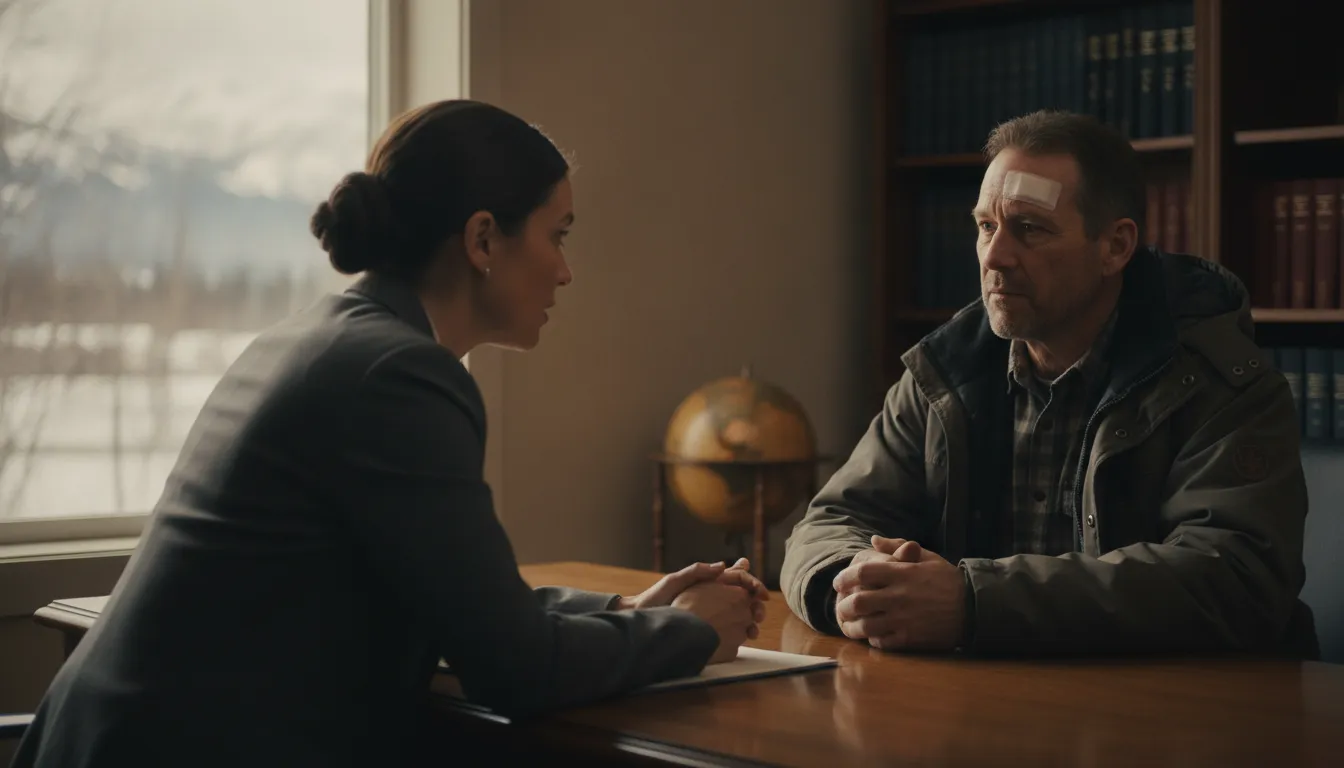
A serious crash can leave you managing far more than a damaged vehicle. Medical treatment, missed work, mounting bills, and pressure from insurance companies can quickly become part of daily life, especially when injuries are severe or symptoms change over time.
An anchorage car accident attorney can help investigate how the collision happened. Counsel can preserve important evidence, address insurance communications, and evaluate losses connected to your injury. The Law Office of Jason Skala, LLC focuses exclusively on serious personal injury and wrongful death cases. Attorney Jason Skala has more than 20 years of personal injury experience, with a practice serving seriously injured people and families across Alaska.
The right next steps can protect both your health and your ability to understand your legal options. Start by focusing on immediate safety and medical care, then document what happened before evidence becomes harder to find.
What Should You Do After a Serious Crash in Anchorage?
Start with safety and medical care
A serious collision can leave you disoriented, frightened, or unsure what to do next. Focus first on immediate safety and medical needs. If anyone may have a serious head injury, call 911 or the local emergency number. Protect the person’s neck and spine, and do not move them unless an immediate danger requires it or emergency personnel direct you to do so.
Some head injuries need emergency care, while others can be evaluated during a scheduled healthcare visit. Concussion symptoms after head trauma still need evaluation by a healthcare professional. Do not dismiss confusion, memory problems, trouble concentrating, blurry vision, headaches, balance problems, nausea, or vomiting simply because the person can walk away from the crash. Seek urgent help for emergency warning signs such as seizures, slurred speech, weakness, inability to use an arm or leg, or confusion that continues to worsen.
Report the crash and protect the evidence
Call 911 or the appropriate police agency, cooperate with the responding officer, and obtain information about the report. If you can do so safely, take photographs or video of the vehicles, roadway, traffic conditions, visible injuries, and surrounding area. Record the names and contact information of witnesses. Keep damaged clothing, vehicle-related documents, tow records, receipts, and other materials that may help show what happened.
Preserve the police report and all medical records. Write down what you remember while the events are still fresh, including where you were traveling, what you saw, and what you felt afterward. If pain or other symptoms develop later, tell your healthcare professional and keep following the recommended care plan. The Law Office of Jason Skala, LLC represents people in Alaska car accident claims, including collisions involving negligent, distracted, intoxicated, or hit-and-run drivers.
Be careful with insurance conversations
Notify your own insurer as required by your policy, but keep the conversation limited to basic facts about the collision. Avoid guessing about fault, minimizing your injuries, or speculating about how quickly you will recover. Do not give a recorded statement to another insurer or sign a release before you understand what it covers and have had an opportunity to obtain legal guidance.
A concise checklist can help when the crash feels overwhelming:
- Move to safety if possible, call 911, and request medical help for anyone who may be seriously injured.
- Follow emergency personnel’s instructions and obtain medical evaluation for head trauma or concussion symptoms.
- Report the collision and ask how to obtain the police report.
- Photograph the scene and vehicles when safe, and collect witness information.
- Preserve photographs, police reports, medical records, bills, receipts, and related documents.
- Contact your insurer without guessing about fault, and decline recorded statements or releases until you receive guidance.
How Do Alaska Car Accident Claims Work?
Alaska car accident claims generally begin with a question of responsibility: who caused the crash, and what evidence supports that conclusion? In a typical at-fault claim, the injured person seeks payment from the responsible driver’s liability insurer. The insurer may investigate the collision, review medical records, and evaluate whether the claimed losses are connected to the crash. That process is not a guarantee of payment, and a serious injury claim may require careful documentation and negotiation.
First-party and third-party insurance claims
A first-party claim is made under your own insurance policy. Depending on the policy and circumstances, it may involve benefits such as medical payments coverage, uninsured or underinsured motorist coverage, or other available protection. A third-party claim is made against the at-fault driver’s liability coverage. These claims can proceed at the same time, but the policies, deadlines, notice requirements, and available benefits may differ.
Coverage limits also matter. Alaska law sets minimum liability coverage, but the applicable amounts and policy terms should be verified against current law and the policies involved. Minimum coverage may not reflect the full value of serious injuries. Additional coverage or other responsible parties may affect the available recovery.
Fault, comparative responsibility, and evidence
Establishing liability can involve photographs, crash reports, witness accounts, vehicle damage, medical records, and other evidence showing what happened and how the injuries developed. Alaska’s civil pattern jury instructions include motor vehicle and highway-safety materials, which can help illustrate the issues considered in negligence cases. They are not a substitute for legal advice or a prediction of how a particular claim will be decided. The Alaska Court System’s civil pattern jury instructions provide that public reference point.
Alaska may reduce compensation when an injured person is found partly responsible, rather than treating every claim as all-or-nothing. The effect depends on the facts, the evidence, and the legal rules applied to the case. Do not assume that a disputed-fault claim is hopeless, but do not assume that everyone can recover regardless of fault either. A careful review should address statements to insurers, available evidence, and any allegations about the injured person’s conduct.
Deadlines require case-specific review
The general guidance for a personal injury claim is a two-year deadline, but exceptions and case-specific deadlines can change the analysis. The statutory materials should be read in context, including Alaska’s statute provisions on time limits and Alaska’s statute on civil claims involving damages. The precise deadline can depend on the type of claim, the parties, when the injury or legal claim accrued, and other facts. Do not wait to investigate a claim simply because treatment is ongoing.
For a practical overview of preserving evidence and dealing with insurers, review the firm’s guide to Alaska car accident claims. Exceptions, coverage questions, and deadlines require legal review based on the facts of the individual case.
What Compensation Can a Serious Injury Claim Include?
A serious collision can affect far more than the first hospital bill. Depending on the facts, an injury claim may address both measurable financial losses and the physical and emotional effects of the injury. The categories that apply, and the evidence needed to support them, depend on the injury. Treatment, responsibility for the crash, and the losses that can be tied to it.
Common categories of loss
Potential compensation may include medical expenses and future care, lost wages or earning capacity, vehicle and other property damage, pain and suffering, and mental anguish. Future care can be important when an injury requires continuing treatment, rehabilitation, medication, assistive equipment, or help with daily activities. Lost earning capacity is different from a single missed paycheck. It may involve how the injury affects a person’s ability to perform the same work, work the same hours, or pursue the same career in the future.
| Loss category | What it may include | Helpful documentation |
|---|---|---|
| Medical expenses and future care. | Emergency care, appointments, therapy, medication, equipment, and reasonably anticipated treatment. | Medical records, bills, treatment plans, prescriptions, and provider opinions. |
| Lost wages and earning capacity. | Time away from work, reduced ability to work, or lasting effects on career capacity. | Pay records, employer statements, tax documents, and work restrictions. |
| Property damage. | Vehicle repairs, vehicle value loss, and damaged personal property. | Photos, repair estimates, invoices, valuation records, and insurer correspondence. |
| Pain, suffering, and mental anguish. | Physical discomfort, limitations, distress, sleep disruption, and changes to daily life. | Medical records, treatment notes, symptom journals, and statements from people familiar with the changes. |
Why documentation and calculators have limits
Keep records as treatment and recovery continue. Save bills, receipts, work communications, appointment information, and notes describing symptoms and limitations. A consistent record can help show how the injury developed and affected ordinary activities. It is also important to understand whether health insurers, government programs, or other providers assert liens or subrogation rights. Those claims may need to be identified and addressed before a recovery is distributed. The process is fact-specific, so do not assume the amount billed is the same as the amount ultimately owed or recoverable.
An online car accident settlement calculator can offer general information about factors affecting claim value. It cannot evaluate medical prognosis, disputed fault, future care, earning capacity, insurance coverage, liens, or the credibility of supporting evidence. It should not be treated as a prediction or a substitute for reviewing the individual claim with an Anchorage car accident attorney.
Why Are Truck Accident Claims More Complex?
A collision involving a commercial truck can require a broader investigation than an ordinary traffic crash. The evidence may sit with several businesses, the vehicle may have passed through multiple hands, and the injuries may affect a person’s ability to work and live independently. The claim is not limited to what happened in the few seconds before impact. It may also involve decisions made during hiring, dispatch, loading, maintenance, and insurance communications.
More than one party may share responsibility
The truck driver is not always the only person or business whose conduct matters. Depending on the evidence, potentially responsible parties may include the trucking company, a maintenance provider, the truck or equipment manufacturer, and the cargo loader. A company may have information about the driver’s assignment and communications. A maintenance provider may have records relevant to brakes, tires, steering, or other equipment. A cargo loader may possess information about how the load was placed or secured.
That does not mean every company connected to a crash is legally liable. Responsibility must be tied to the facts and the applicable law. It does mean that an investigation should identify the full chain of people and businesses involved rather than accepting an early explanation that places all responsibility on the driver. The truck accident claims process can require examining those relationships alongside the scene evidence.
Important records can disappear or change
Commercial cases often turn on records that are not in an injured person’s possession. Driver logs, dispatch messages, route information, inspection records, repair and maintenance files, onboard data, photographs, and cargo documents may help establish what happened. Some evidence is maintained electronically, and some may be retained for only a limited period. A prompt preservation request can help identify and protect relevant material before it is overwritten, discarded, or separated from the people who created it.
It is also important to keep your own evidence organized. Save photographs, medical records, bills, wage information, witness details, and every letter or email from an insurer. Avoid guessing about fault in written or recorded communications. An insurance representative may be gathering information for the company while presenting the conversation as routine claim handling. You can provide basic facts without speculating about your injuries, responsibility, or the value of the claim.
Severe injuries raise the stakes
Commercial truck crashes can cause traumatic brain injuries, spinal cord injuries, fractures, and wrongful death. These conditions may require emergency treatment, rehabilitation, ongoing care, changes to a person’s work, or support for surviving family members. The early record of the crash and the medical course can therefore matter long after vehicles leave the scene. Preserving evidence promptly is especially important when the injuries are severe or a family is handling a death while also facing insurance pressure.
For more on the investigation and injury issues in commercial truck accident cases, a case-specific review can help clarify what records may matter and which parties should be examined. No two crashes are identical, and an investigation should follow the evidence rather than assume a result.
When Should You Talk With an Anchorage Car Accident Attorney?
You may want to speak with an attorney when the facts, injuries, or insurance issues make the claim difficult to evaluate on your own. A conversation does not obligate you to hire anyone. It can help you understand what information matters, what to avoid saying to an insurer, and whether your situation deserves closer review.
Situations that deserve prompt legal attention
Consider reaching out if you or someone in your family suffered a serious or catastrophic injury. Examples include a brain injury, spinal injury, major fracture, or another condition that may require extended treatment. Symptoms can also appear later. Pain, confusion, headaches, or limited movement that develop after a crash should receive medical attention, even if the first examination did not identify a serious problem.
Legal guidance may also be useful when fault is disputed, several vehicles were involved, or a commercial vehicle played a role. Different accounts, changing evidence, and multiple insurance policies can make responsibility less clear. If a person died in the crash, the family may need advice about a potential Alaska car accident claim and the steps to take after a serious injury.
You should also consider a consultation if an insurer is pressing you for a recorded statement. The same applies if it asks you to sign a release, disputes treatment, or offers a settlement before the full impact of the injury is known. Be cautious about assuming that the first offer reflects every loss. Medical expenses, future care, lost income, vehicle damage, and the personal effects of an injury may not be clear immediately.
A practical decision checklist
- Injury: Are symptoms serious, worsening, delayed, or likely to require future care?
- Fault: Does anyone dispute what happened, or do the available accounts conflict?
- Coverage: Are policy limits, uninsured or underinsured motorist coverage, or available insurance unclear?
- Parties: Were multiple vehicles, a delivery driver, a trucking company, or another commercial operator involved?
- Family impact: Did the crash cause a death or leave someone unable to work or manage ordinary responsibilities?
- Insurance pressure: Are you being asked to make a statement or accept money before you understand the claim?
These circumstances do not mean you must hire a lawyer. They indicate that individualized information may be more useful than a general online answer. The Law Office of Jason Skala, LLC is an Anchorage-based firm focused exclusively on serious personal injury and wrongful death. Jason Skala has more than 20 years of personal injury experience. A consultation can help you decide what next step fits your circumstances, without assuming a particular result.
How Do You Choose the Right Injury Lawyer in Alaska?
The right lawyer should fit the facts, seriousness, and location of your case. After a major collision, look beyond a general promise to “fight for you.” Ask how the firm handles injury claims and what evidence it will evaluate. Also ask how communication works and what you will owe if the case does not result in a recovery.
Look for a focused practice and relevant experience
Start with practice focus. A firm that concentrates on serious personal injury and wrongful death is more likely to regularly address medical documentation, disputed fault, insurance coverage, lost income, and long-term consequences. Ask whether the lawyer has handled cases involving the kind of crash and injury you experienced, including commercial vehicles, traumatic brain injuries, spinal injuries, or wrongful death.
Experience should be specific and verifiable. The Law Office of Jason Skala, LLC identifies Jason Skala as having more than 20 years of personal injury experience. The firm also reports recovering more than forty million dollars for clients. Those are firm-reported credentials, not a promise that another case will have the same result. You can review Jason Skala’s experience and ask how that background relates to your circumstances.
Ask how the lawyer will understand your evidence
Good representation requires more than reviewing a police report. Ask what the lawyer will need from you, which records may matter, and how the team will track treatment, work restrictions, prior conditions, and future care. Medical records can be difficult to interpret in the context of a claim. The firm’s biography states that Skala grew up around a family medical practice and has familiarity with medical records and physician practice. That background should be presented as relevant experience, not as medical expertise or a guarantee.
Also ask how the firm will investigate photographs, vehicle damage, witness accounts, scene evidence, and insurance communications. A clear answer can show whether the lawyer has a practical plan for testing liability and documenting the injury’s effect on your life.
Clarify communication, case fit, and fees
Before signing, ask who will be your point of contact, how often you can expect updates, and who makes important decisions about settlement or litigation. Discuss whether the firm accepts cases outside Anchorage and how meetings, document review, and consultations work for people in remote Alaska communities.
Read the fee agreement carefully. Ask whether the representation is contingent, what percentage applies, which case expenses may be deducted, and what happens if the case ends without a recovery. The agreement should answer these questions in plain language. For a fuller explanation of car accident lawyer fees, review the written terms and raise any issue you do not understand before moving forward.
What Makes The Law Office of Jason Skala Different?
The Law Office of Jason Skala, LLC is built around a focused type of representation: serious personal injury and wrongful death matters. Based in Anchorage, the firm works with injured people and families across Alaska, including clients who may live outside the state’s largest communities. That focused practice can help keep attention on the medical, financial, and insurance issues that often make a serious collision claim difficult to manage.
The firm is not presented as a general practice. Its work centers on cases involving life-changing injuries and loss, where the record may include extensive treatment, disputed fault, lost income, and long-term consequences. The firm’s personal injury focus provides more detail about that positioning and the types of matters it handles.
Experience that includes the medical record
Jason Skala has more than 20 years of personal injury experience, according to the firm’s published biography. He also grew up around a family medical practice. That background gives him familiarity with how medical records and physician documentation are developed and read. It does not replace medical advice, and it does not determine the outcome of a claim. It can, however, provide useful context when a case requires careful attention to diagnoses, treatment history, limitations, and future care.
The firm reports recovering more than forty million dollars for clients. That is a firm-reported figure, not a prediction of what any new case will recover. Every claim depends on its evidence, liability facts, injuries, available coverage, and other circumstances. You can review Jason Skala’s experience and professional background before deciding whether the firm’s approach fits your situation.
A fee structure designed to reduce an initial barrier
Serious injuries can create immediate financial pressure. The firm’s contingency-fee model means clients do not pay attorney fees upfront. Attorney fees are taken only from a successful recovery, as set out in the applicable fee agreement. The firm’s approved message is, “You Don’t Pay. They Do.” That arrangement does not mean every claim succeeds or that expenses are never discussed. Prospective clients should review the agreement carefully and ask questions about fees, costs, and case responsibilities before signing.
Choosing an Anchorage car accident attorney is ultimately a personal decision. A focused practice, Alaska roots, experience with injury records, and a clear fee agreement are useful factors to evaluate, but no attorney can promise a particular result.
Frequently Asked Questions
Can you recommend a personal injury attorney in Anchorage?
No lawyer is the right fit for every case. Look for counsel who regularly handles serious injury and wrongful death claims, understands Alaska practice. Can explain the fee agreement clearly, and has the resources to investigate disputed fault, medical evidence, and insurance coverage. Ask how the lawyer will communicate with you and who will handle day-to-day questions.
What is the best lawyer for a car accident?
The best choice depends on the facts and severity of your injuries. A strong fit should have focused experience with motor-vehicle claims. Understand how injuries affect future care and earning capacity, and be willing to review the evidence before making promises. Experience should support careful case evaluation, not a guarantee of compensation or a particular result.
Is Alaska an at-fault state?
Generally, an injured person seeks compensation by showing that another party’s conduct caused the crash and resulting losses. Fault and damages are fact-specific, and an insurer may dispute either one. Alaska’s civil materials address negligence, motor-vehicle safety, and damages, but a lawyer should review the collision evidence and any comparative-fault issues in your case: Alaska Civil Pattern Jury Instructions.
What is the statute of limitations for personal injury claims in Alaska?
A general rule used for many Alaska personal injury claims is a two-year filing deadline, but exceptions can change when the period begins or applies. Claims involving government entities, wrongful death, minors, delayed discovery, or other special facts may involve different requirements. Do not wait to investigate. Have a lawyer verify the deadline for your specific claim and preserve evidence promptly.
Schedule a Free, Confidential Consultation
A serious car or truck crash can leave you sorting through treatment, insurance questions, and next steps. A private conversation can help you understand how your claim may be evaluated and what information to preserve. The Law Office of Jason Skala, LLC offers free consultations, with no upfront fees and attorney fees collected only from a successful recovery. To schedule a free, confidential consultation, call 907-569-6633 during business hours, Monday through Friday, 9:00 AM to 5:00 PM Alaska Time.