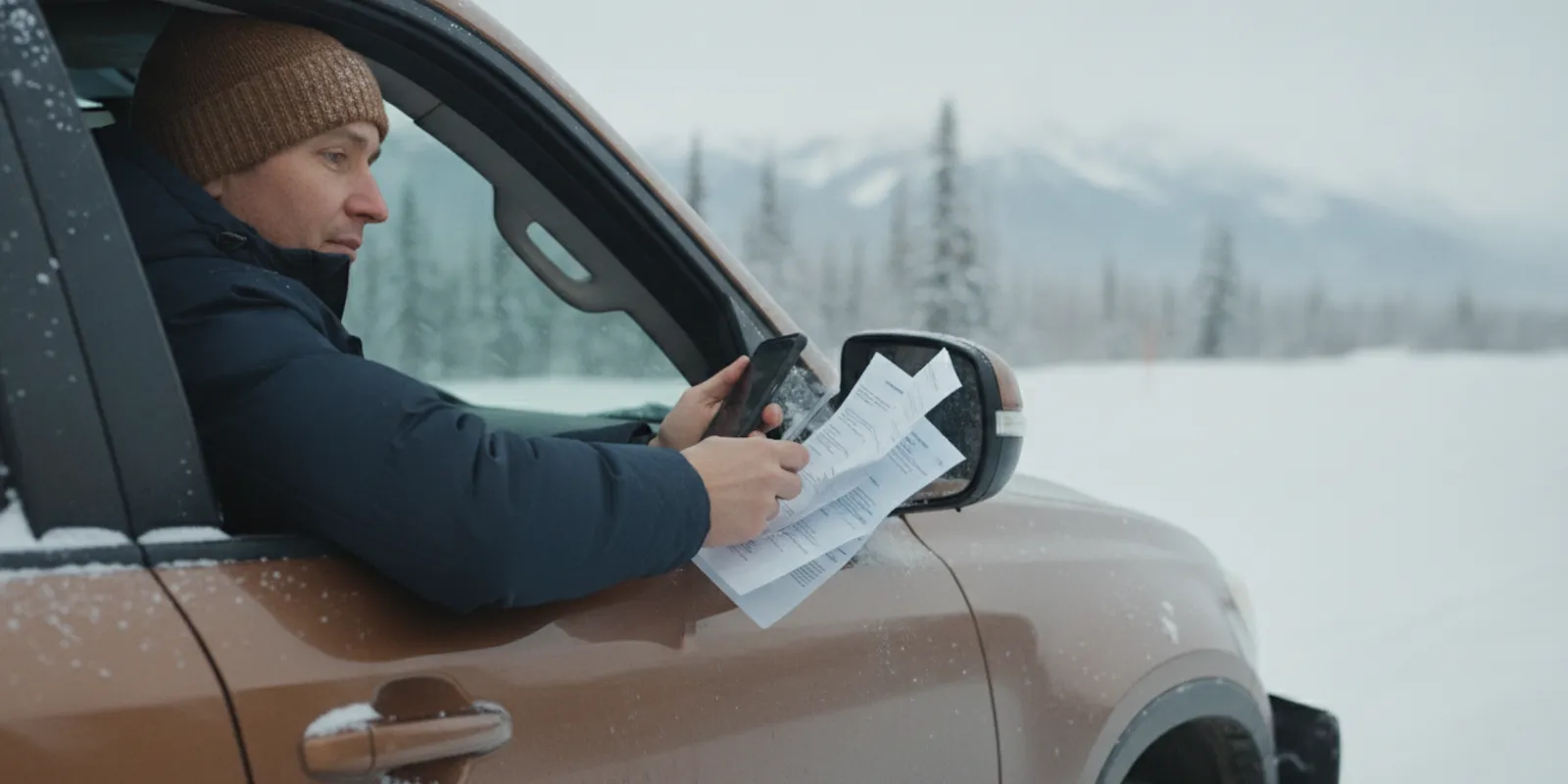
An uninsured motorist claim in Alaska is a request for compensation under your own auto policy after an at-fault driver without applicable insurance injures you. The claim may help pay covered losses, but the policy language, available limits, evidence, and facts of the crash all matter. If you were seriously hurt, focus first on medical care and preserving information about the collision.
Schedule a free consultation and pay no fee unless there is a recovery
When another driver has no insurance, you may feel there is nowhere to turn. But an uninsured driver does not automatically mean you have no possible source of recovery. Your own policy may include uninsured motorist (UM) coverage, and other coverage or legal options may need to be examined. Start by checking the policy and confirming how the insurer classifies the other driver and the crash.
This guide explains the basics of UM claims in Alaska, the difference between UM and underinsured motorist coverage, practical steps to take, and what to consider if your insurer disputes your claim. For broader accident steps, see this guide to what to do after a car accident in Anchorage and our overview of personal injury claims for Alaskans.
What Is an Uninsured Motorist Claim in Alaska?
Uninsured motorist coverage is an optional part of an auto insurance policy that may cover certain injury losses when an at-fault driver has no applicable liability insurance. You make the claim with your own insurer, but the insurer still evaluates coverage, responsibility, and the value of your losses under the policy and applicable law.
UM coverage is different from the at-fault driver’s liability insurance. A liability claim is made against the responsible driver’s insurer. A UM claim is made under your own policy because the responsible driver has no insurance that can pay the claim. Alaska insurers generally must offer UM coverage, but that does not mean every driver has purchased it. Review your declarations page and the policy itself to see whether you accepted or rejected coverage, what limits apply, and who is insured.
Coverage can depend on who was injured and how the collision happened. A policy may define insured people to include the named policyholder and certain family members, or people occupying a covered vehicle. The precise terms vary. If you were a passenger, borrowed the vehicle, or were struck while walking or cycling, do not assume you are either covered or excluded without checking all potentially applicable policies.
A hit-and-run may raise a UM issue, but the policy can impose conditions for establishing that an unknown vehicle caused the injury. The insurer may ask for a prompt report, witness information, or other proof. Follow reporting requirements and preserve any available evidence. To compare general accident and claim steps, see this Alaska personal injury claim guide.
Is Uninsured Motorist Coverage Required in Alaska?
Alaska drivers are not automatically covered just because UM coverage is offered; whether it is in your policy depends on the coverage you selected and the policy record. Insurers generally must offer UM coverage, so check the application, declarations page, and any signed rejection or selection forms to understand what you bought.
Do not rely only on an online summary or the amount shown for a different coverage type. Ask the insurer for the complete policy in effect on the crash date, including endorsements and any UM selection or rejection form. If you cannot locate the documents, request them in writing and save the response.
These details are worth confirming:
- Whether UM coverage was in force: Look for a UM line on the declarations page and check the policy period.
- The limits: Identify the per-person and per-accident limits, if listed, and any applicable deductible or other limitation.
- Who qualifies as an insured: Read the definitions for named insureds, household members, passengers, and covered vehicles.
- What counts as an uninsured vehicle: The policy may define when a vehicle or driver is considered uninsured.
- Notice and cooperation terms: Check how and when the policy requires you to report an accident or provide records.
For a neutral starting point on insurance questions or consumer assistance, the Alaska Division of Insurance provides information about insurance regulation in the state. A regulator’s general resources are not a substitute for reading your contract or getting advice about a specific claim.
How Is UM Coverage Different From Underinsured Motorist Coverage?
UM coverage generally addresses an at-fault driver with no applicable insurance, while underinsured motorist (UIM) coverage may apply when the driver has insurance but the available liability limits are not enough to cover eligible losses. Both are first-party claims under your own policy, but they are not interchangeable.
| Coverage or claim | When it may apply | Who handles the claim | What to check |
|---|---|---|---|
| At-fault driver’s liability | The responsible driver has applicable liability insurance. | The other driver’s insurer | Liability limits, fault, covered losses, and settlement terms |
| Uninsured motorist (UM) | The responsible driver has no applicable insurance, and your policy includes UM coverage. | Your own auto insurer | UM selection, insured status, limits, notice terms, and proof requirements |
| Underinsured motorist (UIM) | The responsible driver has insurance, but the available coverage may not be sufficient for eligible losses. | Your own insurer, subject to the policy and applicable rules | Other policy limits, your UIM terms, notice, and settlement procedures |
| Medical payments or health coverage | May pay specified medical expenses depending on the coverage and plan. | Your auto insurer or health plan | Covered expense definitions, limits, coordination, and repayment terms |
UM does not necessarily pay every loss or the full amount you believe the crash caused. The policy limit can cap available benefits, and the insurer may dispute fault, causation, or the value of damages. Other coverage may also be relevant, but the order and interaction of policies depend on the facts and contract wording. Learn more about the broader process in what to expect when filing a personal injury claim in Alaska.
How Do You File an Uninsured Motorist Claim in Alaska?
To start a UM claim, report the crash to your insurer, ask it to open a claim under the policy in effect, and preserve records showing the collision, the other driver’s insurance status, your injuries, and your financial losses. Prompt notice helps avoid preventable disputes, but you should not guess about coverage or sign a final release before understanding its effect.
- Get medical care and follow up. Seek emergency treatment for urgent symptoms and follow clinicians’ recommendations. Tell providers about symptoms even if they appear later. Keep copies of visit summaries, referrals, prescriptions, and bills.
- Report the collision. Contact law enforcement as appropriate and make a timely report to your insurer. Explain that the other driver may be uninsured, but avoid guessing about what coverage applies. Request a claim number and the adjuster’s contact information.
- Identify all potential insurance. Ask for the other driver’s insurance information and have the insurer confirm whether coverage exists. Review your own policy and consider whether a vehicle owner, household member, employer, or another policy might be relevant. Do not assume the first answer is complete.
- Preserve evidence. Keep photographs, video, witness names and contact details, the police report, messages, and notes about the collision. Save damaged property when practical and keep repair estimates and receipts. Write down what you remember while details are fresh.
- Organize injury and loss records. Save medical bills, records, time missed from work, wage documentation, travel costs for treatment, and receipts for other accident-related expenses. Keep a simple dated log of symptoms and how they affect daily activities.
- Review requests before responding. Give accurate information and cooperate with reasonable policy requirements. Ask what a form is for and how the insurer may use a recorded statement or authorization. Do not alter, exaggerate, or speculate about facts.
- Track communications and deadlines. Keep a log of calls, emails, requests, and promised follow-ups. Ask the insurer to confirm important decisions in writing. There may be legal deadlines and separate policy notice or proof requirements, so do not wait to investigate them.
What should you prepare for the insurer?
A well-organized claim file makes it easier to answer specific questions and notice gaps. You do not need to wait until every record is available before reporting the collision. Instead, make a working folder and add documents as you receive them. Keep the originals where possible and send copies unless the insurer explains why it needs an original.
- A one-page timeline with the collision date, location, people involved, first treatment, and later appointments.
- Photos or video of vehicle damage, the scene, road conditions, visible injuries, and any relevant signs or signals.
- The police report number and any documents you receive from law enforcement, plus witness names and contact details.
- Your policy declarations page and correspondence about UM coverage, including a written coverage selection or rejection if you have it.
- Medical bills, treatment summaries, work absence records, wage information, and receipts for reasonable out-of-pocket expenses.
- A communication log noting the date, person, claim number, what was discussed, and what each side agreed to do next.
Keep notes factual. A symptom journal can record when pain or other problems occur and how they affect tasks such as sleeping, driving, household work, or returning to a job. It should describe your experience, not make a medical diagnosis. Correcting an error promptly is better than leaving inconsistent dates or details unexplained.
The insurer may investigate the crash, review available medical records, ask for a statement, and evaluate damages. You can ask what information is still needed and why. If an adjuster says the other driver is insured, ask for the basis of that conclusion and whether the policy was active for the date and vehicle involved.
These steps also apply to many other injury claims, though the details differ. The step-by-step Alaska injury claim guide and guide to protecting your rights after an Alaska injury offer additional context. For a local example of documentation and early steps, see what to do after an Anchorage car accident.
What If My Insurance Company Denies My UM Claim?
If your insurer denies or limits a UM claim, request the decision and the policy provisions it relies on in writing, then compare the explanation with your documents and the evidence. A denial is not automatically correct, but disagreement alone does not establish that the insurer acted improperly.
Common issues can include a dispute about whether UM coverage was selected, whether the claimant qualifies as an insured, whether the other driver meets the policy definition of uninsured, whether notice requirements were met, or whether the crash caused the claimed injuries. The insurer may also dispute responsibility or the amount of loss. Ask for a clear explanation of each reason rather than trying to answer a vague denial all at once.
Next, gather the records that speak to the disputed point. For example, if the insurer questions coverage, request the complete policy and selection forms. If it questions the other driver’s insurance status, ask what verification it obtained. If it disputes injury causation or value, organize treatment records and bills, and ask your providers to clarify relevant medical information where appropriate.
Keep communications professional and factual. Correct errors in writing and attach supporting documents. Do not sign a release or accept a settlement without understanding what claims and future rights it would resolve. Also, do not assume that internal review or negotiations extend a legal deadline or waive a policy requirement.
Insurance bad-faith concerns are fact-specific. A delay, low offer, or denial does not by itself prove bad faith. The insurer’s conduct, the information it had, the policy, and applicable law all matter. If important benefits are denied, the delay is causing problems, or a release is being requested, consider speaking with a lawyer who handles serious injury and insurance disputes. More detail on the claim process is available in this overview of the Alaska personal injury claim process.
When Should You Talk to an Attorney About a UM Claim?
Consider legal advice when the injuries are serious, the policy or insured status is unclear, the insurer disputes fault or coverage, or the proposed settlement may not account for the losses. Early review can help identify deadlines, policy conditions, and evidence that may otherwise be overlooked.
For example, a crash may involve multiple injured people, disputed vehicle ownership, more than one potentially relevant policy, or an uncertain long-term medical outlook. In those situations, it can be difficult to evaluate a settlement from bills received so far alone. A lawyer can review the policy and records, communicate with insurers, investigate liability, and explain available options. No lawyer can promise a particular result.
The Law Office of Jason Skala, LLC focuses exclusively on serious personal injury and wrongful death cases in Alaska. Attorney Jason Skala has more than 20 years of personal injury experience, a family background in medicine, and has recovered more than $40 million for clients, as reported by the firm. The firm offers free initial consultations and handles cases on a contingency-fee basis: clients pay no attorney fee unless the firm obtains a recovery. Case costs and the terms of a written fee agreement should be discussed directly.
To learn more about the firm’s approach to injury matters, read this guide to navigating personal injury claims or when to consider hiring an injury claims lawyer in Anchorage.
Request a free consultation with no upfront attorney fee
Frequently Asked Questions
Will my insurance rates go up if I make a UM claim?
It depends on your policy, claim history, and applicable rules. Ask your insurer how it handles a UM claim and request a written explanation of any premium or renewal impact. Do not skip reporting a collision just to avoid a possible rate change without first understanding your policy duties.
Can I make a UM claim if I was a passenger or pedestrian?
Possibly. Coverage depends on the policy’s definition of an insured, the vehicle involved, your relationship to the policyholder, and other applicable coverage. Review the actual policy and ask insurers to identify the terms they apply.
What if the at-fault driver has insurance, but the limits are too low?
That situation may involve underinsured motorist coverage rather than UM coverage. Whether UIM applies depends on your policy, the available liability limits, and the claim facts. Do not accept a settlement from another insurer before checking whether your own policy requires notice or consent.
Can I still file a claim if the crash was a hit-and-run?
A hit-and-run may qualify under some policies, but the requirements can be strict and depend on policy language and evidence. Report the crash promptly, follow any police-report instructions, preserve witness and scene information, and ask your insurer what proof it requires.
How much can a UM claim pay?
The amount depends on the coverage limit and terms, the evidence of fault and injury, and the losses the policy and applicable law allow. A policy limit is not a guaranteed payment; the insurer may dispute whether coverage applies or what the claim is worth.
An uninsured driver can make an already difficult crash more complicated, but reviewing the policy, reporting the loss, and preserving evidence gives you a clearer starting point. For serious injuries or a disputed claim, get advice before signing away rights or letting an important deadline pass.