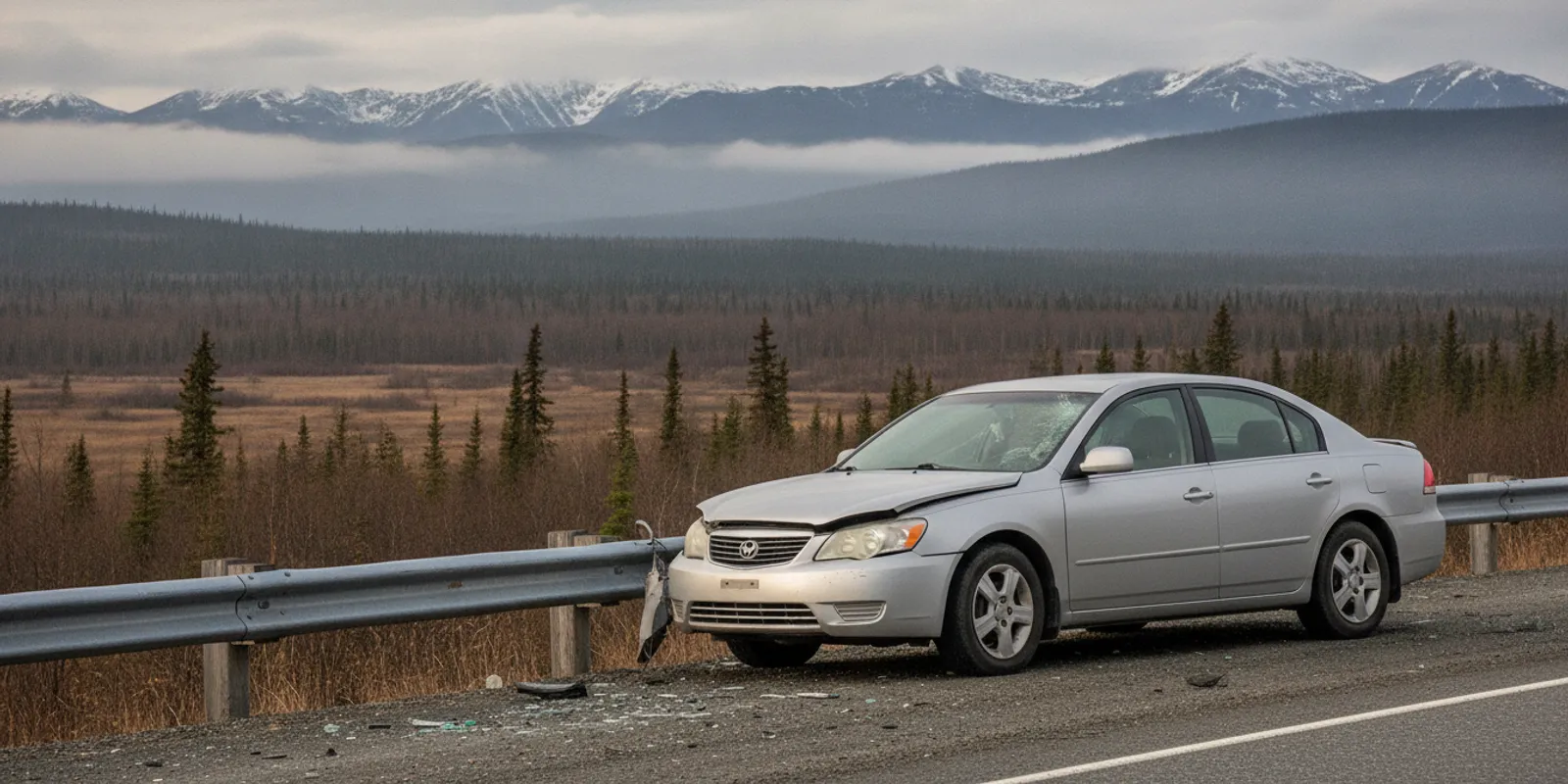
If a driver leaves after hitting you, an Alaska hit and run accident lawyer can help you understand your options for identifying the driver or seeking recovery through available insurance. First, get to a safe place, call for medical help if needed, and report the crash; do not try to chase the other vehicle.
Schedule a free consultation and learn how the contingency-fee model works: you pay no upfront attorney fees, and a fee is owed only if there is a successful recovery.
A hit-and-run can leave you with injuries, vehicle damage, and no obvious person to contact about the loss. The next steps matter. A police report, prompt medical care, photographs, witness information, and careful insurance communications can help protect both your health and your ability to evaluate a claim. The details vary by crash and policy, so do not assume that every hit-and-run is covered the same way.
This article focuses on the problems that arise when a driver flees. For the broader steps involved in a motor vehicle claim, see our guide to navigating personal injury claims and our overview of personal injury law in Alaska.
What happens legally after a hit and run in Alaska?
A driver who leaves the scene may be investigated, but the fact that a driver fled does not by itself identify that person or decide who caused the collision. Police may document the scene and seek information that can help locate the vehicle or driver. Separately, you may be able to pursue an insurance claim, including a claim under your own uninsured motorist coverage if your policy and the facts meet its requirements.
Keep the criminal investigation and your injury claim distinct. A police report can preserve important facts, but it does not guarantee that a driver will be identified, that an insurer will accept liability, or that compensation will be paid. You may still need to show how the crash happened, document your injuries and losses, and satisfy the terms and deadlines that apply to the relevant insurance policy or legal claim.
After a reported collision, avoid guessing about details you did not see. If you were a passenger or a witness, say what you personally observed. If you were hit while driving, write down your recollection as soon as you safely can. In a hit-and-run, even a partial plate number, vehicle color, direction of travel, or description of damage may be useful when combined with other information.
For a wider look at motor vehicle claims, our step-by-step car accident guide explains the basic post-crash process. The details of a fleeing driver make quick documentation and careful follow-up especially important.
How can uninsured motorist coverage help after a hit and run?
Uninsured motorist (UM) coverage may provide a path to seek payment from your own insurer when an at-fault driver cannot be identified or has no applicable insurance, but the policy language and the facts control. Do not treat UM coverage as automatic: confirm what coverage you purchased, what types of loss it addresses, and what proof or notice the insurer requires.
Start by locating your auto policy declarations page and complete policy. Look for UM coverage limits, any separate coverage for property damage, and terms addressing unidentified drivers or hit-and-run crashes. Call your insurer promptly to report the collision and ask how to submit a claim. Keep the name of the representative, the date and time, and any claim number.
When talking with an insurer, be accurate and measured. You can report what happened without speculating about speed, distance, fault, or the other driver’s identity. Before giving a recorded statement, signing a broad medical authorization, or accepting a settlement, make sure you understand what you are agreeing to. A settlement or release may affect the ability to seek further payment for the same loss.
Insurance coverage can involve more than one policy. Depending on the circumstances, a claim might involve your own policy, a household policy, an employer or vehicle policy, or insurance connected to another responsible party. Whether any of those sources applies requires reviewing the actual facts and policy terms. Do not assume another person’s policy covers you just because you were in their vehicle.
How should you organize an insurance claim?
A simple claim file makes it easier to give consistent information and spot unanswered questions. Keep the policy, claim number, adjuster contact details, and every written request in one place. Add a dated note after each call that records who you spoke with, what information you gave, what the insurer requested, and any stated next step. If a request is unclear, ask for it in writing and confirm the due date rather than guessing.
Separate confirmed facts from estimates. For example, write that you saw a dark SUV traveling north if that is what you remember; do not turn an uncertain impression into a specific make or speed. If you later recall a detail, add a dated note instead of silently changing the original account. This creates a clearer timeline for both the investigation and coverage review.
| Possible route | When it may matter | What to check |
|---|---|---|
| At-fault driver’s liability insurance | The driver is identified and insured, or the insurer can be established. | Identity, applicable policy, liability decision, and claim deadlines. |
| Your uninsured motorist coverage | The driver is unidentified or uninsured and your policy applies. | Coverage limits, policy definitions, reporting rules, and evidence requirements. |
| Other potentially applicable insurance | Another vehicle, household, employer, or responsible party may be involved. | Who is insured, what event is covered, and whether exclusions or limits apply. |
This comparison is a starting point, not a coverage determination. Policy wording and the specific facts can change which options are available. A lawyer can help review the insurance questions alongside the injury claim; our article on what to expect when filing an Alaska injury claim describes the process in more detail.
What evidence should you collect after the driver flees?
Collect what you safely can without delaying medical care or putting yourself in danger. Do not follow the fleeing vehicle. If you cannot gather evidence at the scene, ask someone you trust to help or return to the location later only when it is safe and appropriate.
- Write down what you remember. Record the time, location, travel direction, weather and road conditions, what you saw before impact, and what happened afterward. Note any part of the license plate, make, model, color, distinguishing features, or visible damage. Label estimates as estimates.
- Photograph the scene and damage. If safe, take wide and close-up images of vehicle damage, debris, skid marks, the roadway, signs, lighting, and anything that may show the direction of travel. Preserve original files and avoid editing them.
- Find witnesses. Ask for names and contact details and, if they agree, a short account of what they observed. A witness may have seen the vehicle or the impact even if you did not.
- Report the crash. Contact law enforcement and provide the facts you know. Ask how to obtain the report or supplement it if you later remember additional details. Give your insurer notice as required by your policy.
- Get medical attention and keep records. Tell clinicians about symptoms, follow their instructions, and keep visit summaries, prescriptions, referrals, and bills. Symptoms may change over time, so report new or worsening problems to a medical professional.
- Save related records. Keep repair estimates, towing and rental receipts, work absence information, and insurer letters or emails. Maintain a simple timeline of calls, appointments, symptoms, and expenses.
Make a backup of photographs and documents. Keep a copy of the police report and write down the report number. If nearby homes or businesses may have cameras, tell police and ask the property owner about preserving relevant footage. Video systems may overwrite recordings, so prompt requests can matter. Do not trespass or attempt to obtain footage through unauthorized access.
Which details are most useful when a vehicle is unidentified?
A partial plate is useful, but it is not the only lead. Record the direction the vehicle traveled, the lane it occupied, the approximate time, and whether it turned at an intersection or entered a parking area. A passenger may remember a different detail than the driver. Ask each witness to write down their own recollection separately, while it is fresh, rather than discussing or combining accounts first.
Note where the impact occurred on your vehicle and where debris came to rest, but do not move or handle objects if doing so would be unsafe. Photograph the scene from more than one angle when possible. If the crash happened near a business, transit stop, or intersection, give police the location and a rough time window so they can assess whether footage or other records may exist. Do not promise yourself that a camera captured the event; recording angles and retention periods vary.
These steps overlap with the guidance in our Anchorage car crash response guide. If the crash involved a commercial vehicle, the evidence and insurance picture may be different; see our guide to truck accident claims.
What deadlines apply to a hit-and-run injury claim in Alaska?
Do not wait to investigate deadlines. Alaska law generally sets a two-year period for many personal injury actions, but the date the period begins and the rules that apply can depend on the claim. Different deadlines may apply to claims involving a government entity, a minor, a death, or other special circumstances. Insurance policies can also impose notice or cooperation requirements that arise much sooner than a lawsuit deadline.
The fact that the driver has not been found does not necessarily pause every deadline. Nor does an ongoing police investigation automatically preserve an insurance claim or extend the time to file suit. Ask a lawyer to assess the specific dates and legal issues rather than relying on a general deadline summary.
In broad terms, a lawsuit is a court process involving formal filings and the exchange of evidence, and may proceed toward a hearing or trial if it does not resolve earlier. A general discussion of that process appears in this overview of what happens when someone sues after an Alaska injury. Your own claim may follow a different course, and the source is not a substitute for advice about your facts.
Gather dates now: the crash, first medical visit, first notice to the insurer, and any written deadline in a letter or policy. If you are unsure whether you have already reported the crash correctly, ask the insurer how to provide notice and keep proof of the communication. Our overview of the Alaska injury claim process can help you understand common stages, but it cannot determine the deadline for an individual case.
What records help track deadlines and losses?
Use a basic chronology with the date of the collision, when you reported it, when you received a claim number, medical visits, repair or towing events, and letters with response dates. Save envelopes or electronic notices that show when correspondence arrived. If you receive a request that appears to set a short deadline, note it immediately and ask the insurer or a lawyer what response is needed. Do not assume that a phone conversation changes a written deadline.
Keep expense records even while liability and coverage are unresolved. A folder or spreadsheet can list each expense, date, amount, and supporting receipt. Record missed work or changes to regular activities in plain language, without exaggeration. Good organization cannot guarantee a particular outcome, but it can reduce the risk that important information is lost or mixed up as the claim develops.
What can an Alaska hit and run accident lawyer do?
A lawyer may help investigate the collision, identify possible sources of coverage, preserve evidence, and handle communications about an injury claim. The work depends on the facts and the coverage available. No attorney can promise that a fleeing driver will be found or that an insurer will pay a particular amount.
Depending on the case, legal work may include:
- Reviewing the police report, photographs, witness accounts, and available video to look for leads about the vehicle or driver.
- Identifying records that may need to be preserved and making appropriate requests for evidence.
- Reviewing insurance policies and helping evaluate notice, coverage, limits, and insurer requests.
- Organizing medical records and documenting how the injury affects treatment, work, and daily activities.
- Communicating with insurers, evaluating settlement proposals, and explaining options if a dispute remains.
- Assessing whether a lawsuit is appropriate and taking the required steps if the matter cannot be resolved informally.
That review may help clarify several issues at once: whether the evidence supports a claim, which policy should be notified, whether an insurer’s request is limited or broad, and whether a proposed release resolves only vehicle damage or additional losses too. If an insurer disputes whether a hit-and-run occurred or whether a policy condition was met, the police report, witness statements, photographs, and prompt notice records may be important to evaluating that disagreement.
Alaska claims can involve serious injuries and complicated records. The Law Office of Jason Skala, LLC focuses exclusively on serious personal injury and wrongful death cases. Jason Skala has more than 20 years of personal injury experience and a family background in medicine that informs his ability to read medical records. The firm reports more than $40 million recovered for clients; past results do not predict or guarantee the outcome of a new case.
For a related discussion of choosing counsel, read our guide to hiring a personal injury lawyer in Anchorage. The firm offers free initial consultations and works on a contingency-fee basis: there are no upfront attorney fees, and the fee is a percentage of a successful recovery under the agreement. Ask about the terms and any case costs before deciding whether to proceed.
Frequently asked questions
Should I chase a driver who hit my car and left?
No. Move to a safe location and contact law enforcement. Chasing another vehicle can cause another crash or put you in danger. Share any details you remember with police rather than trying to confront the driver.
Can I make an insurance claim if the driver is never identified?
Possibly. Your own uninsured motorist coverage may apply, depending on the policy and the evidence. Promptly notify your insurer, ask what documentation it needs, and have the policy reviewed if you are unsure about coverage.
Do I need a police report for a hit-and-run claim?
Report the collision to law enforcement and keep the report number. A report can document what was reported and may aid an investigation, but it does not by itself establish coverage or guarantee payment. Follow your policy’s reporting requirements too.
Should I accept an insurer’s first offer?
Do not accept or sign a release until you understand what losses it resolves and whether future claims are waived. Consider whether you have a clear picture of your injuries, treatment, and available coverage. You can ask a lawyer to review an offer before making a decision.
How much does it cost to speak with the firm?
The Law Office of Jason Skala, LLC offers a free initial consultation. Its contingency-fee model means no upfront attorney fees; attorney fees are taken as a percentage only upon a successful recovery, as set out in the agreement.
Request a free consultation to discuss your options at no upfront attorney-fee cost.
A hit-and-run can make an already difficult crash more uncertain, but prompt reporting, careful documentation, and a timely review of insurance and deadlines can help you understand the next steps. If you were seriously injured, consider getting legal guidance before you sign a release or let an important deadline pass.