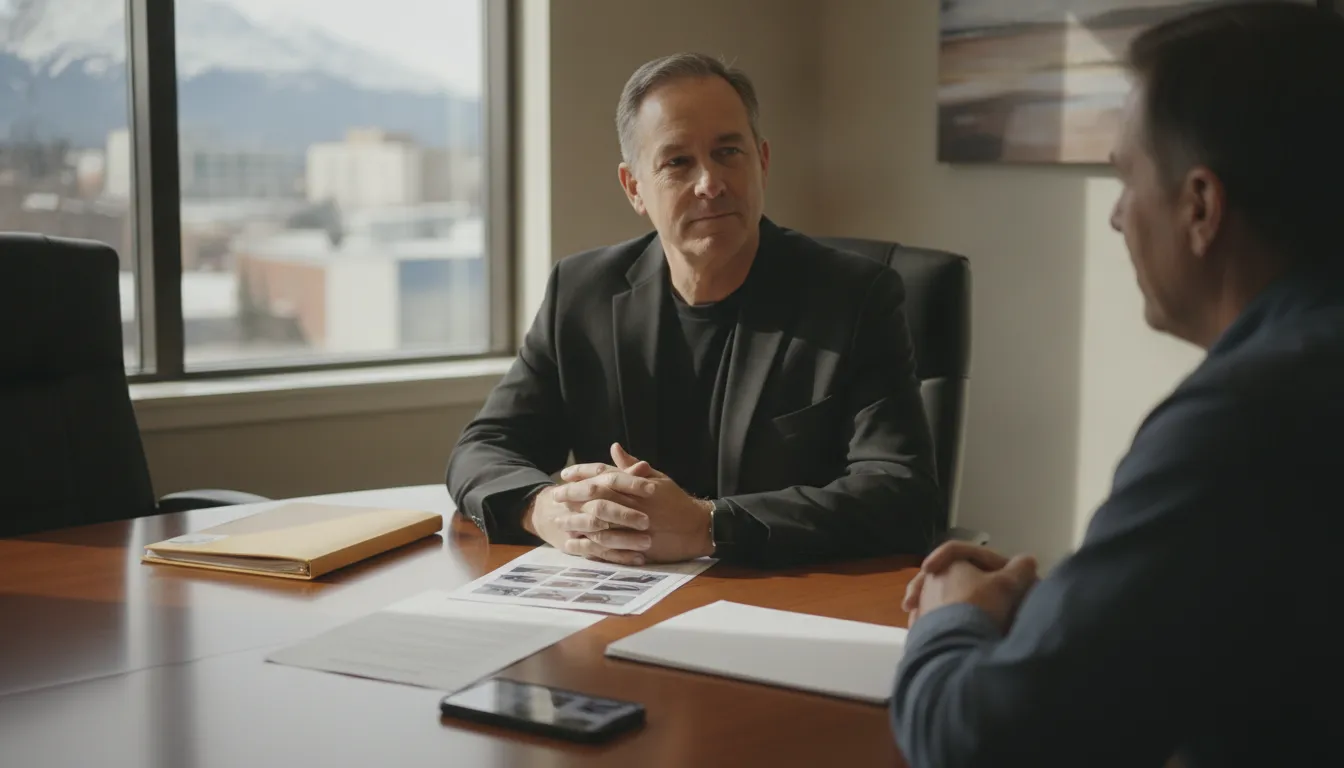
A personal injury consultation goes better when you bring a short stack of facts instead of a perfect file. The Law Office of Jason Skala, LLC looks at serious injury and wrongful death cases only. At the first meeting, Jason Skala wants the date, the place, your treatment so far, and what the crash, fall, or other event changed in your work and home life. You do not need a complete medical chart. You do need enough for an honest read on whether the firm can help.
Office hours are Monday through Friday, 9:00 a.m. to 5:00 p.m. Alaska Time. The first meeting is free. You pay no attorney fee unless the firm recovers money for you. If you were hurt in the Mat-Su Valley, the steps in our Palmer injury guide are a useful start before you call. If the crash was in Knik-Fairview, read what to do after a Knik-Fairview car accident before you sort the folder. That page covers the scene. This one covers the meeting.
What a Personal Injury Consultation Covers
The meeting is a case review, not a promise of a dollar amount. Jason Skala listens to how you were hurt, who else was involved, and what care you have had. He then says whether the facts look like a case the firm takes. The practice is limited to serious personal injury and wrongful death. Routine matters outside that focus are not a fit.
Expect plain talk about three things. First, whether someone else’s carelessness appears to have caused the harm. Second, what records are still missing. Third, what happens next if you decide to hire the firm. Most people leave with a short list, not a stack of forms.
Bring questions. Good ones include who will talk with the insurer, how medical bills are tracked, and when it makes sense to talk about settlement. Skip guessing at fault percentages in the room. The point is to see if the facts support a claim, then to plan the next records to gather.
People often arrive worried they will be quizzed. That is not the tone of the meeting. You can say you do not remember when a detail is fuzzy. You can also say a family member is helping you keep track of appointments. Honesty about memory gaps is more useful than a polished story that leaves out the hard parts.
If you already hired another lawyer and want a second look, say that at the start. Bring the fee agreement if you have it, or just the firm’s name. Switching counsel is a real step with its own paperwork. It should be discussed openly before anyone reviews the medical facts in depth.
What you do not need on day one
You do not need every bill, a finished police narrative, or a typed timeline. A phone photo of the scene, the other driver’s name, and the clinic you visited are enough to start. If something is missing, say so. Gaps are normal in the first weeks after an injury.
Bring These Records to the Meeting
Sort papers into four groups: the event, your medical care, your work, and any messages from insurers. A folder or a phone album is fine. Label photos with the date if you can. If you only have some of this, still come. Partial records are more useful than a delayed meeting.
| What to bring | Why it helps | If you do not have it yet |
|---|---|---|
| Date, time, and place of the injury. | Pins the story to a location and a clock. | Write your best memory and note what is unsure. |
| Names of other drivers, owners, or witnesses. | Shows who may be responsible. | Bring the insurance card photo or tow receipt. |
| Photos or a short video of the scene and vehicles. | Preserves details that change fast in Alaska weather. | Describe what you saw and where you stood. |
| Clinic or ER name and the first visit date. | Links the injury to the event. | Bring the discharge paper or a portal screenshot. |
| Bills, benefit letters, or a pharmacy list. | Shows care already received. | List providers and say bills have not arrived. |
| Pay stubs, a work note, or missed-shift dates. | Shows time away from a job. | Write your job, employer, and usual weekly hours. |
| Insurer letters, claim numbers, and any offer. | Stops mixed messages about what was said. | Bring the adjuster’s name and phone number only. |
Photos should be ordinary and factual. Damage to a vehicle, the road or floor, a dog’s location, or a worksite condition is useful. Do not stage anything. Skip graphic close-ups of wounds. A dignified record is enough.
Group the photos before you walk in. One album for the scene, one for vehicles or property, and one for papers. Ten clear shots beat a hundred blurry ones. If a passenger or coworker took the pictures, note their name. The firm then knows who can explain the angle later.
Wage records deserve the same care. A pay stub, a scheduling-app screenshot, or a short note from a supervisor can show missed shifts. If you are self-employed, a seasonal fisherman, or you work a rotation, bring whatever shows a normal week. A tax summary can wait. The meeting only needs a picture of the income you have lost so far.
If another driver’s insurer has already called, do not give a recorded statement before the meeting. Write down what they asked and what you answered. Bring that note. The firm can take over insurer contact if you hire it.
How to Prepare If Your Records Are Thin
Many people call before the police report or the full chart exists. That is fine. Use this order if you only have an hour before the meeting.
- Write the date, time, city, and a five-line account of what happened.
- List every clinic, hospital, or pharmacy you have used since the injury.
- Save phone photos of vehicles, the scene, visible damage, and any insurance cards.
- Note missed work days, your job title, and whether a doctor limited your duties.
- Collect insurer letters, claim numbers, and any settlement paper you were asked to sign.
- Write three questions you want answered before you leave.
Alaska weather and distance change what “bring” means. If you are in Fairbanks, on the Kenai Peninsula, in Southeast Alaska, or in a village that requires a flight, you do not need to haul originals to Anchorage. Clear photos of papers are enough for a first look. The office is at 800 E Dimond Blvd, Ste 3-305, Anchorage. The same free consult is available by phone during weekday office hours.
Scene steps and the meeting are different jobs. Use the Knik-Fairview guide linked above for what to say at the roadside. Use the folder on this page once you are sitting down with counsel. Mixing the two is how people show up with photos and still forget the claim number.
A note on deadlines
Do not wait for a perfect file if weeks are passing. Alaska law generally requires a personal injury or wrongful death lawsuit to be filed within two years of when the claim accrues, under Alaska Statutes section 09.10.070. Some claims, including certain claims against public entities, follow shorter notice rules. The consultation is the right time to ask which clock applies to you. This is general information, not a deadline calculation for your case.
What Jason Skala Reviews With You
Jason Skala has spent more than 20 years on personal injury cases only. He grew up in Chugiak and comes from a family of doctors, so medical records are part of the conversation, not a side task. The firm has recovered more than $40 million for clients. Past results do not predict your case. They do explain why the first meeting looks hard at the medicine and the facts.
He will ask what hurt, what treatment you have started, and whether a doctor has limited your work. He will also ask who paid for care so far, including health insurance or an employer plan. You do not need to know the legal labels. Say what changed: sleep, driving, a shift you missed, a flight you could not take home to a village.
If the harm came from a car, truck, motorcycle, or pedestrian crash, say so plainly. The same is true for a dog bite, a fall, an oil-field injury, an airline injury, or the death of a family member. The firm serves people across Alaska from the Anchorage office. It does not keep a local office, local staff, or a promised response time in other cities. If your question is only about a fee percentage, our guide on what a car accident lawyer costs is the better page. The meeting itself is about the facts of your injury.
The firm also handles the work that usually starts after you are hired. That includes getting records, dealing with insurers, and taking a serious case toward trial when a fair result is refused. You do not need to decide all of that in the first hour. You only need a clear picture of whether the firm can take the case and what it still needs from you.
Ask how messages will work if you are hard to reach. People on a fishing rotation, a village schedule, or a night shift often miss weekday calls. Tell the office the best window and whether a family member may relay a message. The firm does not promise round-the-clock replies. It does keep clients posted during the Monday through Friday office day.
Bring a list of doctors you already trust, especially if care is split between Anchorage and a smaller community. Jason Skala’s family background in medicine helps him read charts. Your own providers still direct your treatment. The legal meeting should never push you to skip an appointment or to stop following a doctor’s instructions.
Questions Worth Asking Before You Leave
Use the last part of the personal injury consultation to test fit. Ask who will handle calls with you. Ask how the firm advances case costs, and whether those costs come out of a recovery. Ask what records you should request next, and what you should not sign.
Ask whether your situation is the kind of serious injury the firm accepts. A clear no is useful. It saves you weeks. A clear yes should come with the next step, usually a written contingency agreement you can read at home. You should not feel pushed to sign in the chair.
If a family member died, ask for a confidential consultation and bring the death certificate only if you already have it. Funeral bills can wait. What matters first is who may bring the claim and what support the household lost. The firm’s wrongful death practice explains that path in more detail than a first meeting can.
For vehicle injuries, the car accident practice page lists the kinds of crashes the office handles. Bring the consultation back to your facts. That means the road, the other party, and your care. General pages do not replace the papers in your folder.
Write the answers down before you leave the room or end the call. Note what you were asked to send, who will contact you, and whether the firm can take the case. A one-page recap prevents the fog that hits on the drive home. If a spouse or adult child came with you, ask them to keep that page.
Do not sign a release or a broad medical authorization in the parking lot afterward. If an adjuster is waiting on a call, say you just met with counsel and that further contact should wait. You can still keep treating. The consult does not pause your medical care, and it does not require you to hire the firm that day.
Call the Anchorage office at 907-569-6633 on a weekday between 9:00 a.m. and 5:00 p.m. Alaska Time to schedule a free consultation. You do not pay an attorney fee unless the firm wins.
Frequently Asked Questions
Do I have to bring every medical record?
No. Bring the first clinic or hospital name, the date you went, and any discharge paper or bill you already have. The firm can request the fuller chart if it takes the case. A portal screenshot is enough when paper copies have not arrived.
Is the personal injury consultation free?
Yes. The initial consultation is free, and the firm works on a contingency fee. You pay no attorney fee unless there is a recovery. Case costs are separate from the attorney fee and should be explained before you sign anything.
Can I meet by phone if I do not live in Anchorage?
Yes. People across Alaska, including the Mat-Su Valley, Kenai Peninsula, Fairbanks, Southeast, and remote communities, can call during weekday office hours. Photos of your papers are enough. You do not need to fly in with originals for a first look.
Should I talk to the other insurer before the meeting?
Report the basics to your own insurer if your policy requires it, and stick to the date, time, place, and people involved. Do not give the other driver’s insurer a recorded statement or sign a release before you have legal advice. Bring their letter or claim number instead.
What if I am still treating?
Come anyway. Ongoing care is normal. List the providers you are seeing and any work limits your doctor has given you. Waiting for a final bill can put pressure on Alaska’s filing deadlines, so ask about timing at the meeting.