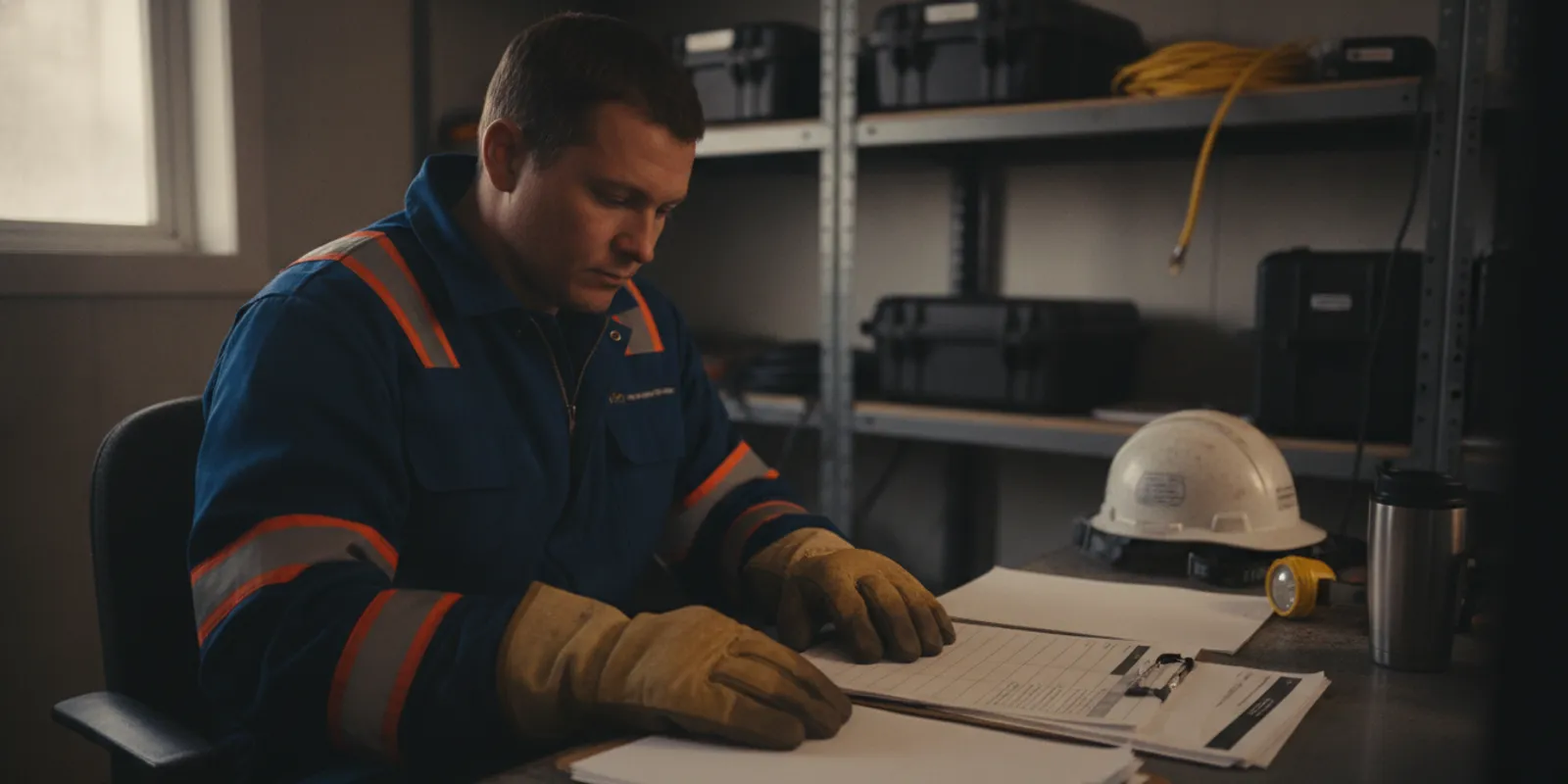
After a serious work injury, medical care and immediate safety come first. When you are able, preserving records can help keep a clear account of the task, site conditions, equipment, and response. An oilfield accident lawyer may later review how those pieces fit together, but you can start by protecting what you already have without entering a hazardous area or taking documents without permission. The Law Office of Jason Skala, LLC handles serious personal injury and wrongful death cases on a contingency-fee basis: clients pay no upfront attorney fees, and fees are taken only as a percentage of a successful recovery.
Request a free consultation with no upfront attorney fees
Why can safety records matter after an oil-field injury?
An incident file is rarely a single form. One record may show the work assignment; another may describe a hazard review; a third may document equipment inspection or the response after someone reported an injury. Taken together, records can help build a timeline and identify questions that still need answers. They do not automatically establish what caused an injury or who is legally responsible.
For example, a signed training sheet may show that a training event was recorded. It does not, by itself, explain what was taught, whether the worker understood it, or whether it addressed the task underway that day. An incident report may capture an early account but omit technical details or people who were not interviewed. Read each record in context and preserve it alongside related materials rather than treating one document as a complete explanation.
Oil-field work may involve an employer, site operator, contractor, staffing company, equipment owner, or other businesses. Different entities may keep different files. Which records exist, who may access them, and whether they matter depend on the facts and applicable rules. A workers’ compensation matter and a possible claim involving another party are not necessarily the same question. Do not assume a safety record decides either issue by itself.
Which records should you preserve first?
Start with records you already possess or can lawfully obtain. Preserve originals where possible and make a separate copy for your working file. Do not alter, annotate, delete, or recreate the original record. The list below is a practical guide, not a statement that every record exists or must be provided directly to every worker.
| Record group | Examples to look for | Questions it may help clarify |
|---|---|---|
| Incident and notice | Incident report, injury notice, supervisor messages, dispatch or radio notes | When the event was reported and what information was recorded at the time |
| Assignment and procedures | Work order, task instructions, permit, job safety analysis, procedure version | What work was planned and which hazards or controls were identified |
| Training and qualification | Orientation material, training record, certificate, sign-in sheet | What instruction or qualification was documented for the task |
| Equipment | Equipment identifier, inspection checklist, maintenance or repair record | Which equipment was involved and what condition or service history was recorded |
| Site and hazard | Hazard report, safety meeting notes, site-condition notes, corrective-action record | What conditions were observed or raised and how the concern was handled |
| People and communications | Witness names, contact details, emails, texts, photographs, call notes | Who may have relevant information and what was communicated |
| Medical and work status | Visit paperwork, work restrictions, work-status notices, missed-work calendar | What care was received and how the injury affected work over time |
Make a short inventory as you collect items. Record the date you obtained each one, who provided it, its original file name, and whether it is an original or a copy. If a document is missing, mark it as not received rather than assuming it does not exist. This small distinction can prevent a gap in your folder from being mistaken for proof that no record was created.
How can you capture your own account accurately?
When your health allows, write down your recollection in your own words. Start with the date, approximate time, location or work area, shift, task underway, and the sequence of events. Note the people present and the equipment involved. Describe conditions you personally observed, such as lighting, weather, noise, visibility, or the state of a work surface, but do not guess about technical causes you do not know.
Separate what you remember firsthand from information someone told you later. If you are unsure whether an event happened at a particular time or cannot remember a detail, say that. A careful note that identifies uncertainty is more useful than a confident-sounding guess. Date the note when you write it and keep it separate from official reports. Do not revise your original account later; add a dated supplement if you recall something else.
Preserve a copy of any report or notice you submit, along with the submission date and method. Keep emails and texts in their original form where possible. A screenshot may be a useful additional copy, but preserve the full conversation and date context when you can. Do not delete messages that seem unfavorable or edit a photo to change its meaning. A complete record is more reliable than a selective collection.
What should you do about photos, equipment, and a worksite?
If you already took photographs safely and lawfully, keep the original files. Note when and where each image was taken and what it shows. Do not return to an active worksite or handle equipment just to obtain a better picture. Site access, photography, and confidentiality rules may apply, and a dangerous area can remain dangerous after an incident.
Do not move, test, repair, or dispose of equipment to preserve evidence. If a machine, tool, or component may be relevant, record its identifying information only if you can do so safely and with permission. Tell an appropriate representative that the item may matter and ask about an authorized process for documenting it. Avoid making a technical conclusion from appearance alone.
Some details change quickly. Equipment may be repaired, the work area may be cleaned, and temporary conditions may disappear. If you have a concern that a particular item or record could be changed or lost, make a factual note of what you observed and when. Ask a lawyer how to raise a preservation concern safely and through an appropriate channel. Do not trespass, bypass site controls, or pressure a coworker to obtain restricted material.
How can you request records held by an employer or contractor?
A worker may not have the formal safety file. Potential custodians can include an employer, site operator, contractor, staffing company, or equipment owner. Start by identifying the specific record type and the likely organization that maintains it. A request that names the shift, date, work area, task, equipment, and document is usually clearer than a broad request for everything about a site.
Depending on the incident, you may want to ask about the applicable task instructions or procedure version, a permit, hazard analysis, inspection or maintenance record, incident investigation, corrective-action documentation, and communications about the reported hazard or response. This is not a guarantee those items exist or that they can be released directly to you. Policies, privacy interests, and laws may govern access and disclosure. Never access a computer system or restricted file without authorization.
Keep a copy of your request and any answer. Note whom you contacted, when, and how. If the response says a record is unavailable, cannot be shared directly, or was not located, preserve that response as well. It may explain a process or access limit; it does not, by itself, prove wrongdoing. If you need help deciding how to seek a record or raise a preservation issue, legal advice can help you understand options specific to the situation.
How should you organize the records you have?
A simple, consistent system is enough. Create folders for incident and notices, work instructions, equipment, communications, medical records, and work or wage information. Use filenames with a date and short description, but retain the original file name and metadata where practical. Keep a backup in a secure place and limit access, especially for medical records and personal identifiers.
- Build a dated timeline: List the injury, reports, medical visits, work-status changes, requests for records, and important conversations in order.
- Track sources: For each document, note who supplied it and when you received it.
- Keep versions: If a report or procedure is revised, preserve each version and record when you obtained it.
- Separate evidence from notes: Store your personal recollection separately from official documents and do not write on the originals.
- Record gaps neutrally: Use labels such as requested, not received, or custodian unknown, rather than drawing conclusions.
- Protect the collection: Avoid broad circulation, public posting, or sharing sensitive records through unsecured channels.
Suppose you have a text reporting the injury, a visit summary, and a photograph of a damaged guard, but no maintenance record. Your index could show the date and source of the three items and list the maintenance record as not received, possible custodian: equipment owner. That creates a useful next question without claiming the record exists or that the equipment caused the injury.
If you find a factual error in a report, preserve it as written. Make a separate dated note identifying the specific statement you believe is inaccurate, what you remember instead, and the basis for your recollection. Do not alter the report or ask someone else to change their account. For more general Alaska injury information, you can review the firm’s Alaska article archive and accident resources.
How can you turn the file into a useful timeline?
A timeline is not a theory about fault. It is a way to put dated events and records in sequence so that a reviewer can see what is documented, what comes from memory, and where information is missing. Start with a blank page or spreadsheet and use one row per event. A few columns are enough: date and approximate time, event, source, people involved, and follow-up needed. Do not make the timeline more precise than the records allow.
For example, a worker might enter the shift start from a schedule, the assigned task from a work order, the injury time as an estimate from personal recollection, the first report from a text message, and the first medical visit from paperwork. Label each source. If two records give different times, list both and note the discrepancy instead of choosing one without a basis. That keeps the conflict visible for later review.
Next, compare the timeline with your inventory. Ask practical questions: Is there a record for the task briefing? Is the equipment identifier clear? Do you know which company received the hazard report? Is a witness name recorded, or only a first name? This exercise can help you make narrow requests and remember follow-up tasks without assuming that an unanswered question proves anything. Add new information as it becomes available, date each addition, and retain earlier versions if you have already shared a timeline with someone.
Keep interpretation out of the event column. A text sent to a supervisor at about 2:15 p.m. is different from a conclusion that a warning was ignored. The first may be supported by a message; the second is a conclusion that may need context. You can separately note questions you want to ask, but mark them as questions. A careful timeline can help a lawyer or other reviewer understand the file more efficiently while preserving the distinction between documented facts, recollection, and unresolved issues.
What if an insurer or company asks for a statement?
Read a request carefully. Identify who is asking, what is being requested, how it will be used, and whether a deadline applies. Be truthful, and do not guess if you do not know an answer. Before signing a statement, release, or other document, make sure you understand its purpose and keep a copy. If you are uncertain how a request may affect your situation, consider getting legal advice before responding.
Keep communications professional and factual. Do not destroy records, conceal information, or coordinate accounts with coworkers. If the injury affects your ability to work, keep notices about restrictions, scheduling, and return-to-work arrangements, and follow appropriate medical guidance. This article provides general information, not legal advice about a particular claim.
The Occupational Safety and Health Administration (OSHA) provides workplace safety and health information. Its materials may be a starting point for general safety questions, but they do not replace advice about a particular incident, a specific record, or the rules that apply to a worker’s situation.
When may a lawyer help review an oil-field injury file?
Legal review may be useful when injuries are serious, the cause is disputed, several companies were involved, an important record may be lost, or an insurer’s request raises questions. A lawyer can assess the timeline, explain possible paths, and help identify what information may be important to request. The Law Office of Jason Skala, LLC focuses exclusively on serious personal injury and wrongful death cases. Jason Skala has more than 20 years of personal-injury experience, and the firm reports more than $40 million recovered for clients. Those facts do not predict the result of any individual matter.
The firm works on a contingency-fee basis: clients pay no upfront attorney fees, and attorney fees are taken as a percentage of a successful recovery. It offers free initial consultations. Learn more about the firm’s personal-injury practice and Jason Skala’s background. A consultation can be a chance to discuss what records you have, what remains uncertain, and what steps may be appropriate. The firm’s published business hours are Monday through Friday, 9:00 AM to 5:00 PM Alaska Time.
Schedule a free consultation with no upfront attorney fees
Frequently asked questions
Should I keep a copy of the incident report?
Yes, keep a copy if you can lawfully obtain one. Preserve the version you received, record when and from whom you received it, and make a separate note if you believe it is incomplete or inaccurate.
What if I did not take photographs at the site?
Do not return to a hazardous area or enter a worksite without authorization to take pictures. Write down what you remember when you are able, preserve any images already in your possession, and identify other records or witnesses that may help document conditions.
Can I ask my employer for safety records?
You can make a focused request through an appropriate channel, but access depends on the record, the circumstances, and applicable rules. Keep a copy of the request and response. If you are uncertain what may be requested or how, seek advice about your situation.
Do safety records prove who was responsible?
No single document automatically establishes responsibility. Records are considered with the full circumstances, other evidence, and applicable law. Their value may be in preserving facts, helping explain a timeline, or identifying questions for further review.
What is a sensible next step?
Prioritize medical care, preserve records already in your possession, and make a dated list of potentially relevant materials held elsewhere. Keep your collection complete, distinguish firsthand memories from later information, and avoid unsafe efforts to obtain evidence. If you have a serious injury and want to discuss the records and possible next steps, request a free consultation with the firm.