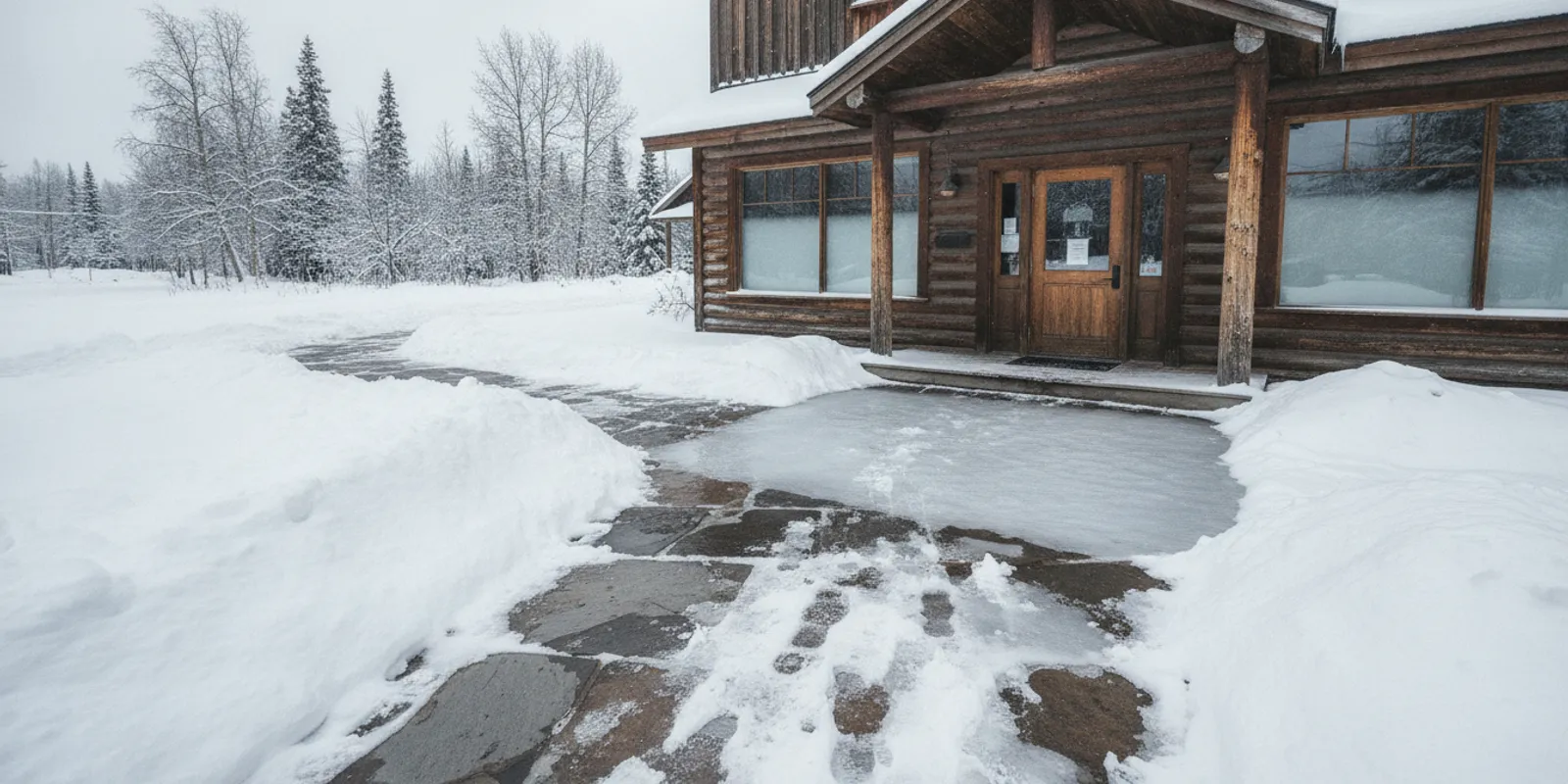
A fall on snow or ice can leave you hurt and unsure what to do next. If you are considering a premises liability lawsuit in Alaska, start with your health and a clear record of what happened. The fall itself does not establish that an owner or manager is legally responsible; control of the area, the condition, notice, and the evidence all may matter.
Schedule a free consultation with no upfront fees
What should you do immediately after a snow or ice fall?
Move to a safe place if you can. Call for emergency help for serious symptoms, and arrange medical evaluation for an injury even if it first seems minor. Follow your clinician’s instructions. Keep discharge papers, referrals, bills, and notes about symptoms and treatment. A medical record can document your care, but it does not by itself establish how the fall happened or who was responsible.
Report the incident to the property owner, manager, or business when possible. Ask that the report identify the date, time, exact location, and your description of the event. Request a copy. If none is available, write down who received the report and when. Keep the account factual. Do not guess how long the ice had been there or adopt someone else’s conclusion about fault.
- Photograph the exact area, nearby entrances, lighting, drainage, warnings, and barriers.
- Take both wide views showing the route and close views of snow, ice, or uneven surfaces.
- Save the shoes and clothing you wore. Photograph them before cleaning or storing them.
- Ask witnesses for names and contact details, and note what each person saw.
- Keep receipts and a simple record of appointments, missed work, pain, and changes in daily activities.
Why can winter conditions make evidence time-sensitive?
Snow and ice can melt, be cleared, refreeze, or be covered by fresh snowfall. A photo from soon after the fall may show a condition that no longer exists hours later. If someone else took a photo or video, ask them to preserve the original file and note when and where it was made. Keep the original image rather than relying only on a cropped or edited copy.
Do not return to a dangerous area or recreate the fall. If you can safely identify the spot from a permitted place, record its location and the route you were using. Note whether it was a walkway, stair, parking area, or entrance. Responsibility may turn in part on who controlled and maintained that particular area, not merely who owned the larger property.
Weather information can help provide context, but weather alone does not prove fault. Preserve what you already have, including dated images, messages, and the incident report. A lawyer may assess whether other records or witness accounts can be requested through proper channels. The firm’s slip and fall practice page has more information about these injury claims.
What issues can a premises liability lawsuit examine?
A premises liability lawsuit generally examines whether a person or entity responsible for an area failed to use reasonable care under the circumstances, and whether that failure caused an injury. The facts matter. Questions may include who controlled the location, what condition existed, how long it may have been present, what inspections or cleanup occurred, and whether warnings or barriers were used.
Neither the presence of ice nor the fact of a fall answers those questions by itself. A property may have a snow-removal plan, yet the timing and execution of the work may still be relevant. The circumstances can differ between a private home, a business entrance, a shared walkway, and a parking area. Avoid assuming either that every icy surface creates a claim or that the injured person must be at fault.
| Question to investigate | Examples of information | How it may help |
|---|---|---|
| Who controlled the area? | Site layout, property or maintenance records, responsibility assignments | May help identify who had a role in maintaining that location |
| What was the condition and when? | Photos, witnesses, incident report, dated messages | May clarify the surface and the timing of observations |
| What response occurred? | Cleanup or inspection records, warnings, barriers | May show what steps were taken before or after the fall |
| What injury and effects followed? | Medical records, treatment history, work and daily-life notes | Documents the harm claimed and its connection to the incident |
Use the table as an organizing aid, not as a checklist that proves a case. You may not have access to property maintenance records, and you should not try to obtain restricted materials yourself. Preserve what is in your possession and note what remains unknown. A lawyer can consider lawful ways to seek relevant information if a claim warrants further investigation.
Alaska law and the property-specific facts affect how responsibility is assessed. A court opinion from another state should not be treated as an Alaska rule. The available citation candidate, a Fifth Circuit opinion concerning a premises liability dispute, involved different circumstances and is included only as an illustration that evidence and facts can matter. It does not state Alaska law or determine the outcome of a winter fall claim here.
How do the location and timeline change the questions?
The place of the fall can point to different practical questions. At a business entrance, for example, useful details may include whether a mat, warning, or barrier was present and where customers were directed to walk. At a shared residential walkway, the question may include who was assigned to maintain that path. In a parking area, the exact route between a vehicle and a building may help identify the area involved. These examples do not decide who is legally responsible; they help make the incident description more precise.
Timing also matters. Note when you arrived, when the fall happened, when you reported it, and when you first sought care. If you do not know exactly, say so rather than filling a gap with an estimate. If conditions changed between the fall and your report, record what you personally observed and when. Separate direct observations from things another person told you.
Imagine that you fell near a store entrance just after a period of changing temperatures. A later photo may show a cleared walkway and cannot, by itself, establish what the surface looked like at the time of the fall. A witness who saw the walkway earlier, an incident report, or a time-stamped image could provide additional context. Conversely, a picture of ice does not alone establish how long it was there, who knew of it, or what precautions were reasonable. The task is to preserve facts without overstating what they prove.
How should you respond to an insurer or property representative?
Give basic, accurate information when needed, but do not speculate. Keep notes of calls and save letters, emails, and messages. Record the date, the caller’s name and role, and what they asked you to provide. Before signing a release or giving a recorded statement, understand what is requested and whether it could affect your rights. A request to resolve a claim quickly does not establish its value or legal merits.
Do not exaggerate symptoms, but do not minimize them. Tell medical providers what hurts and how the injury affects ordinary tasks. If your symptoms change, report that during care. Accurate and consistent information can reduce confusion when records are reviewed later.
If you receive a form, photograph or copy it before returning it and keep a record of the date sent. Do not alter documents or delete messages relevant to the incident. If a question is unclear, you can ask what information is being requested and take time to understand it. An attorney can discuss the implications of a particular request; general information cannot resolve every claim-specific question.
How can you prepare for a legal review?
Put the key details in one place before speaking with counsel. The goal is not to build a legal argument by yourself. It is to make the timeline and the known evidence easier to understand, including where information is incomplete.
- Write a short timeline of the fall, the report, and medical care. Mark approximate times as approximate.
- Collect photos, witness contacts, incident records, and communications about the location.
- List treatment providers and dates; retain bills, referrals, and insurance correspondence.
- Describe how the injury affects work, mobility, sleep, and ordinary activities, using concrete examples.
- List unanswered questions, such as who maintained the walkway or whether the condition was reported before the fall.
Keep original files where possible and make backup copies. Preserve image dates and context. If all you have is one photo or a brief note, keep it; do not decide on your own that it is worthless. When memories are fresh, write a neutral account of what you saw, where you stepped, what happened next, and who was present. Label what you do not remember rather than trying to reconstruct it later.
It can also help to separate documents into simple groups: incident materials, medical care, communications, and expenses or work impact. A dated list of what you have and what you are still seeking helps prevent repeated searches and makes missing items visible. Do not delay necessary treatment or a time-sensitive conversation while trying to assemble a perfect packet.
What can affect whether a claim is worth investigating?
The nature of the injury, documentation, evidence about the hazard, identity of those responsible for the location, and cause of the fall can all shape an evaluation. There may be disputes about what each person did or could reasonably have done. A review is not a guarantee of success or compensation. A careful assessment should distinguish known facts from assumptions and identify what additional information, if any, could matter.
Time limits may apply to injury claims, and the deadline can depend on the circumstances and parties involved. Do not assume that waiting for symptoms to resolve, an insurer’s review, or a property investigation pauses a legal deadline. If you are unsure whether a deadline could apply, seek legal advice promptly rather than relying on a general article.
The Law Office of Jason Skala, LLC focuses exclusively on serious personal injury and wrongful death matters. Jason Skala has more than 20 years of personal injury experience, and the firm reports more than $40 million recovered for clients. Its contingency-fee model means no upfront attorney fees; fees are collected only as a percentage of a successful recovery. Results depend on the specific case and are not guaranteed. You can read about Jason Skala’s background and the firm’s personal injury approach.
Frequently asked questions
Should I report a fall if I am not sure how badly I am hurt?
Consider making a factual report promptly and keep a copy if available. Seek medical advice if you have symptoms or concerns; some injuries may not be obvious right away.
Do photos prove that a property owner is responsible?
No. Photos can document a condition, but responsibility may also depend on control, notice, reasonable care, causation, and other evidence.
What if the snow or ice was cleared before I took a picture?
Preserve any images and notes you do have, identify witnesses, and record when the area changed if you know. Other records may help explain the circumstances, but what is available varies by incident.
Does a fall on a public sidewalk automatically create a lawsuit?
No. The responsible party and applicable duties must be examined. Public use alone does not settle who had responsibility for the area.
Should I revisit the place to take more pictures?
Only if you can do so safely and lawfully. Do not walk onto a dangerous surface or recreate the fall. A later photo can show the general layout, but it cannot necessarily show the earlier condition.
What is a sensible next step after a serious winter fall?
For a case-specific discussion, learn more about slip-and-fall claims and the issues an injury review may consider.
Request a free consultation with no upfront attorney fees
Prioritize your health, preserve what you can safely document, and seek advice based on the actual location and evidence rather than assumptions about winter falls. The Law Office of Jason Skala, LLC handles serious personal injury matters on a contingency-fee basis, so clients pay no upfront attorney fees and fees are collected only from a successful recovery.