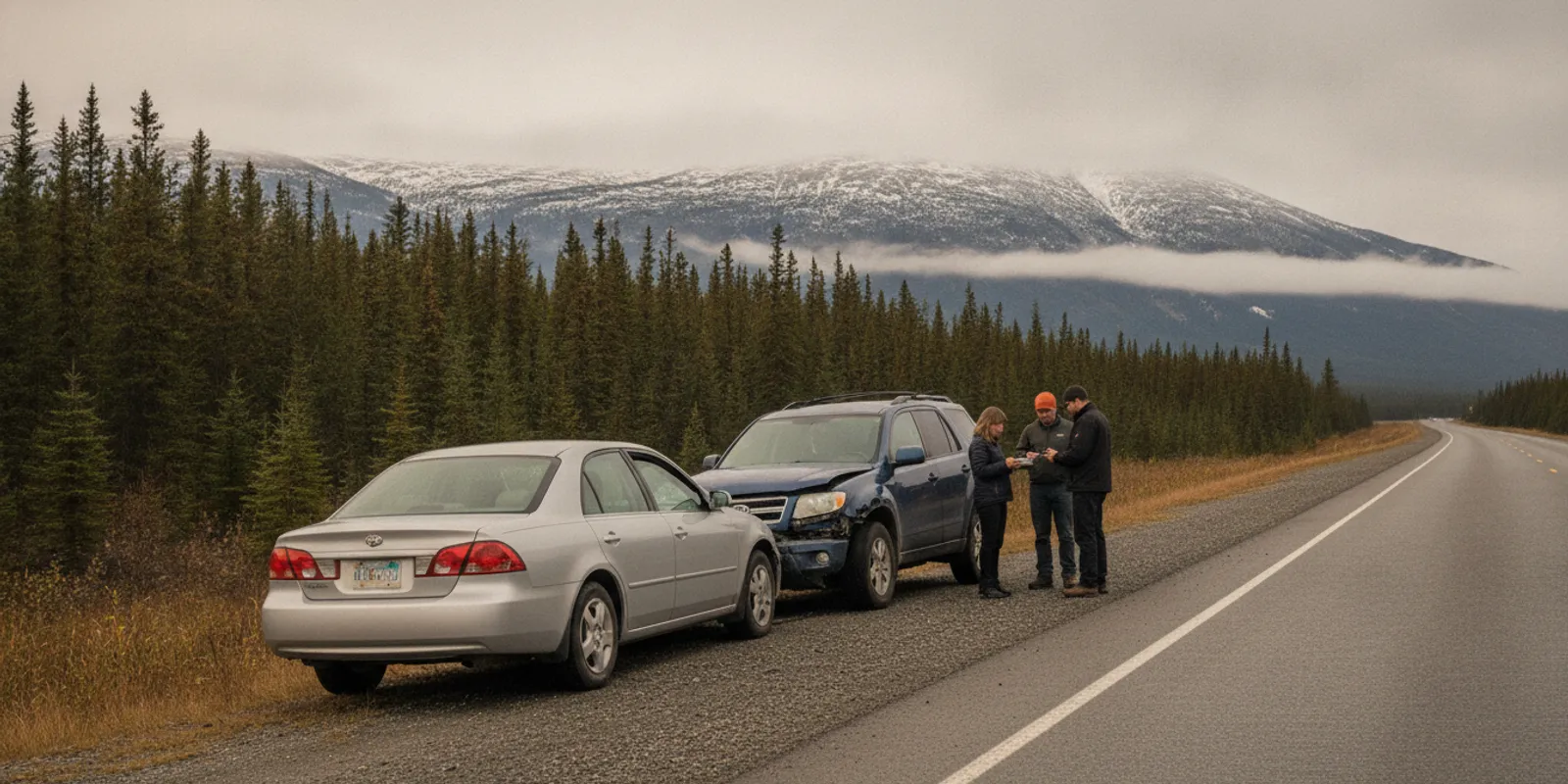
If you are asking who may be responsible for a rear-end collision in Alaska, the driver who struck the vehicle ahead is often an important focus—but rear end collision fault Alaska drivers ask about depends on the facts. A sudden stop, unsafe following distance, road conditions, a chain-reaction crash, or actions by more than one driver can affect how responsibility is evaluated.
Schedule a free consultation—no attorney fee unless there is a recovery
Who is usually at fault in a rear-end collision in Alaska?
In many rear-end crashes, investigators and insurers look closely at the driver behind. Drivers are expected to pay attention to traffic and leave enough space to respond when the vehicle ahead slows or stops. If a driver follows too closely, looks away from the road, drives too fast for conditions, or fails to brake in time, those facts may support a finding that the driver contributed to the crash.
But a collision pattern does not decide fault by itself. A rear impact can happen for different reasons, and each driver’s conduct matters. A driver ahead may have braked suddenly because of a hazard. The driver behind may have had little room to react because another vehicle pushed them forward. One or more vehicles may have been involved in a chain reaction. The evidence should be examined before reaching a conclusion.
For an overview of injury claims involving vehicles, see the firm’s car accident practice page. The Law Office of Jason Skala, LLC focuses on serious personal injury and wrongful death cases, rather than general legal matters.
What facts can change who is responsible?
Responsibility depends on what each person did before and during the crash. These common issues can matter:
- Following distance: Was there enough space to stop safely, considering speed, traffic, visibility, and the road surface?
- Speed and attention: Was a driver moving too fast for the conditions, distracted, or unable to respond because they were not watching traffic?
- Braking or lane movement: Did a vehicle stop or change lanes unexpectedly? What prompted the maneuver, and was it reasonable in the circumstances?
- Road and weather conditions: Were ice, snow, standing water, poor visibility, or a roadway obstruction part of the sequence? Drivers still need to account for conditions, but the details matter.
- Vehicle condition: Do records or an inspection raise questions about brakes, tires, lights, or another mechanical issue?
- More than two vehicles: Did a third vehicle cause the first impact or push one vehicle into another?
These are questions for investigation, not conclusions. For example, a sudden stop does not automatically make the front driver responsible. There may have been an animal, a stopped vehicle, or congestion ahead. In the same way, being struck from behind does not, without more, establish every detail about how the crash occurred or which parties may share responsibility.
How do different rear-end crash situations affect the inquiry?
Consider a driver who is stopped at a red light and is hit from behind. The fact that the vehicle was stationary may help explain the point of impact, but investigators may still need to determine whether the rear driver had time and distance to stop, whether visibility was limited, and whether another vehicle caused the impact. In a different situation, traffic slows suddenly on a highway. The question is not simply whether the front vehicle braked; the reason for slowing, the traffic ahead, and the space between vehicles can all help explain what a careful driver could reasonably do.
Lane changes can make the sequence more difficult to sort out. One driver may say a vehicle moved into the lane immediately before impact, while another may remember the vehicle as already established in traffic. Photos showing the damage, witness accounts, video, and the vehicles’ final positions may help test those versions. Damage location alone may not establish when a lane change occurred or what each driver could see.
In a chain reaction, a rear vehicle may first hit one car, which then strikes the vehicle in front. Or the rear vehicle may be pushed forward after being hit by a third car. Those sequences can look similar after the vehicles come to rest, but the timing and order of impacts matter. The accounts of every involved driver, any available recording, and vehicle damage should be compared rather than treating all impacts as one event.
Can more than one driver share fault?
Yes. A crash can involve conduct by more than one person. Alaska follows comparative-fault principles: responsibility may be allocated among parties based on their share of fault, and a person’s share can affect the damages they may recover. The precise effect depends on the facts and the applicable law. Do not assume that a claim disappears simply because an insurer says you may have contributed to the collision.
Consider a hypothetical chain reaction. The first driver brakes for traffic. A second driver follows too closely and hits that vehicle. The impact pushes the second vehicle into a third. The sequence, spacing, speed, and timing may help show whether one driver or several contributed. In a different crash, the rear vehicle may have already been struck by another car before it hit the vehicle ahead. The initial impact and later contact need to be evaluated separately.
Potentially responsible parties are not always limited to the drivers. Depending on evidence and the legal relationship, a vehicle owner or an employer could be relevant. A maintenance issue or another outside factor may also warrant investigation. Whether any additional person or entity has legal responsibility is case-specific; it should not be presumed from the fact that they owned, maintained, or were connected with a vehicle.
Comparative fault also means that an account can involve more than one contributing act without making every participant equally responsible. For example, one driver may have been moving too fast for icy conditions while another may have changed lanes without enough space. The facts could support different levels of responsibility, or could show that one of those actions did not contribute to the collision at all. It is not useful to guess at a percentage from a short description; that assessment requires a closer look at the evidence and applicable law.
What evidence can help explain how the crash happened?
Useful evidence can disappear or become harder to obtain with time. If it is safe to do so, preserve what you can and make notes while your memory is fresh. Do not put yourself in danger to collect evidence.
- Photographs and video: Take pictures of vehicle positions, damage, the road, traffic controls, visibility, and weather. A dash camera or nearby business camera may have recorded the event; identify possible footage promptly.
- Witness details: Write down names and contact information for people who saw the crash. Note what they observed without asking them to adopt a particular version.
- Crash and incident records: Keep any report number and documents you receive. An Alaska motor vehicle collision report form hosted by NHTSA illustrates fields used to record collision details, including contributing units and manner of collision. A report is one source of information; it does not, by itself, settle civil responsibility.
- Vehicle and trip information: Keep repair estimates, towing records, relevant maintenance documents, and information about the route and timing. Do not repair or discard a damaged vehicle before considering whether it may need to be inspected.
- Medical records: Seek appropriate medical care and keep records of treatment and symptoms. A medical evaluation addresses health, while the collision evidence helps explain responsibility; both may be important to an injury claim.
- Your own account: Write a factual timeline: where you were, what you saw, when traffic changed, and what happened after impact. Separate what you directly observed from what someone else told you.
A useful record does not have to be elaborate. Start with the date, approximate time, road and direction of travel, weather, and the number of vehicles involved. Then write the sequence in order: what traffic was doing, when you first noticed a hazard or slowing vehicle, where the impact occurred, and what happened immediately afterward. Mark uncertain details as uncertain instead of filling gaps with assumptions. If you later remember something new, add a dated note rather than silently changing the original account.
For photographs, take a broad view of the scene first, if it is safe, then closer images of each vehicle’s damage. Include traffic signals, lane markings, sight lines, skid or debris locations, and road conditions when visible. A photo taken from one angle may hide damage or distance, so several views are more informative than one close-up. Do not walk into traffic or delay getting medical help to take pictures. If another person can safely gather information, ask them to do so while you focus on safety.
A collision report can be useful, but it may contain incomplete information or reflect only what was available at the scene. Compare it with photographs, witness accounts, vehicle damage, and other records. If details appear inaccurate, keep a copy and identify the specific point that needs correction or clarification.
How can responsibility be evaluated?
A practical review starts with the sequence of events rather than an assumption based on which vehicle was in front. A lawyer or claims professional may compare the accounts with physical evidence, records, and the applicable rules. The following table shows how common evidence can inform the questions:
| Evidence or circumstance | What it may help clarify | What it does not prove by itself |
|---|---|---|
| Vehicle damage and final positions | Where contact occurred and the likely sequence of impacts | Which driver was legally at fault in every respect |
| Photos, video, or independent witnesses | Traffic movement, visibility, timing, and what happened just before impact | Every relevant fact if the view was blocked or the recording is incomplete |
| Road, weather, and lighting conditions | Whether traction, visibility, or a hazard affected the ability to stop | That a driver had no responsibility to adapt to conditions |
| Vehicle inspection and maintenance records | Whether a mechanical concern may have contributed | That a defect existed or caused the crash without further evidence |
| Crash report and statements | What was reported, observed, or recorded close to the event | A final decision on civil liability or the value of an injury claim |
Evidence may point in different directions. A statement made at the scene can be incomplete, especially when people are shaken or injured. If you do not know an answer, it is better to say so than to guess. Be accurate when communicating with insurers, and keep copies of written messages and documents.
Keep in mind that an insurer’s early view is not the same thing as a complete investigation or a court decision. The adjuster may be working with limited photos, brief statements, or an initial report. If you disagree with an account, identify the facts you believe are missing and preserve any supporting records. Avoid posting detailed crash discussions or images publicly while the claim is being reviewed; a post can be viewed without the context you intended. You do not have to decide the entire fault question at the roadside.
Alaska road conditions can make a sequence harder to reconstruct. For example, snow or ice may affect stopping distance, while darkness or blowing snow may limit what a driver could see. Those conditions do not automatically excuse a driver, and they do not automatically prove carelessness. The relevant questions may include how fast each vehicle was traveling for the conditions, whether the drivers had room to react, what warnings or hazards were visible, and whether the collision would have happened even with reasonable care. If conditions changed quickly, note the approximate time and location and retain photographs or other records that show the scene as it was then. Avoid relying on memory alone weeks later.
In practice, comparing evidence means checking whether independent details fit together. If two accounts differ about whether a vehicle had stopped, consider whether the damage, photographs, or a witness can confirm part of either account. If drivers disagree about a lane change, look for a recording or witness who saw the moments before impact, not only the position of the cars afterward. A record can support one part of a story and leave another part unresolved. That is why it helps to preserve the original files and note where each item came from, rather than relying on a summary or a single person’s recollection.
There can also be a difference between what an insurance adjuster concludes for a claim and what a complete legal evaluation would determine. Ask what facts the decision is based on and whether the insurer has reviewed the crash report, photographs, witness information, and relevant vehicle records. You can make a clear, factual response when you believe an important detail is missing. Avoid turning a disagreement into speculation: point to the evidence you have, explain what it does and does not show, and keep copies of communications.
What should you do after a rear-end crash?
- Address immediate safety. Move away from traffic if you can do so safely, and contact emergency services when needed. Do not leave an unsafe vehicle or roadside location without considering the danger.
- Get medical attention. Some injuries are not obvious immediately. Follow medical advice and describe your symptoms accurately.
- Exchange and preserve information. Record the other driver’s details, vehicle information, witnesses, and report number when available. Take photographs only when it is safe.
- Keep a file. Save bills, repair records, correspondence, photographs, and a short timeline. Note missed work or day-to-day effects, but avoid guessing at losses.
- Be cautious with recorded statements and releases. You may report basic facts, but do not speculate about fault or sign a settlement release before you understand what it covers. Ask questions if a request is unclear.
- Get case-specific guidance when injuries are serious. A consultation can help you understand what evidence may matter and how responsibility could affect a claim.
When organizing a file, keep originals when possible and use a separate copy for notes. Sort items by date, such as scene photographs, medical visits, repair documents, and insurance messages. A simple list of what you have—and what is still missing—can make a later conversation more focused. For example, you might note that you have the report number and photos but still need to identify a witness or ask whether nearby footage exists. Do not try to obtain private records or confront another driver; preserve information lawfully and let appropriate professionals request material when needed.
For more on the firm and its injury-only focus, read about the Law Office of Jason Skala or learn about attorney Jason Skala. The firm’s personal injury information may also help you understand the type of cases it handles.
When should you speak with an Alaska injury attorney?
Consider seeking legal advice if someone was seriously injured, fault is disputed, several vehicles were involved, or an insurer is asking you to accept responsibility or settle quickly. It may also help when important evidence could be lost, the crash involves a commercial vehicle, or the injury’s effect is not yet clear. The right next step depends on your circumstances; an attorney cannot determine the outcome without reviewing the facts.
The Law Office of Jason Skala, LLC handles serious personal injury and wrongful death cases. Attorney Jason Skala has more than 20 years of experience focused on personal injury, and the firm reports more than $40 million recovered for clients. Jason Skala’s family background includes physicians, which informs his familiarity with medical records. These points do not guarantee a result in any individual case.
The firm works on a contingency-fee basis: clients pay no attorney fee unless the firm obtains a recovery, and an initial consultation is free. Discuss the fee agreement and case costs so you understand how they apply to your matter. The firm’s office is in Anchorage and its stated service area includes communities across Alaska; there is no promise of a particular response time or result.
Request a free consultation—no attorney fee unless there is a recovery
Frequently asked questions
Is the rear driver always at fault in Alaska?
No. The rear driver is often closely examined, but responsibility depends on the evidence and the actions of everyone involved. Sudden hazards, multiple impacts, shared fault, or other contributing circumstances may change the analysis.
Can the front driver be partly responsible?
Possibly. The circumstances of a sudden stop, unsafe lane movement, or another action may be relevant. A stop alone does not establish fault; the reason for it and the surrounding conditions matter.
What if several cars were involved?
Each impact and the timing between impacts should be evaluated. Witnesses, photographs, video, vehicle damage, and available reports may help determine whether one or more drivers contributed to the chain reaction.
Does a crash report decide who pays for my injuries?
No. A report can preserve useful information, but it is not necessarily a final determination of civil fault or compensation. Other evidence and the applicable law may also matter.
What is the key takeaway?
The driver who hits a vehicle from behind may bear responsibility, but the answer in an Alaska rear-end collision depends on the full sequence, the evidence, and whether fault is shared. Preserve relevant information, focus on your health, and get case-specific guidance if serious injuries or disputed responsibility are involved.