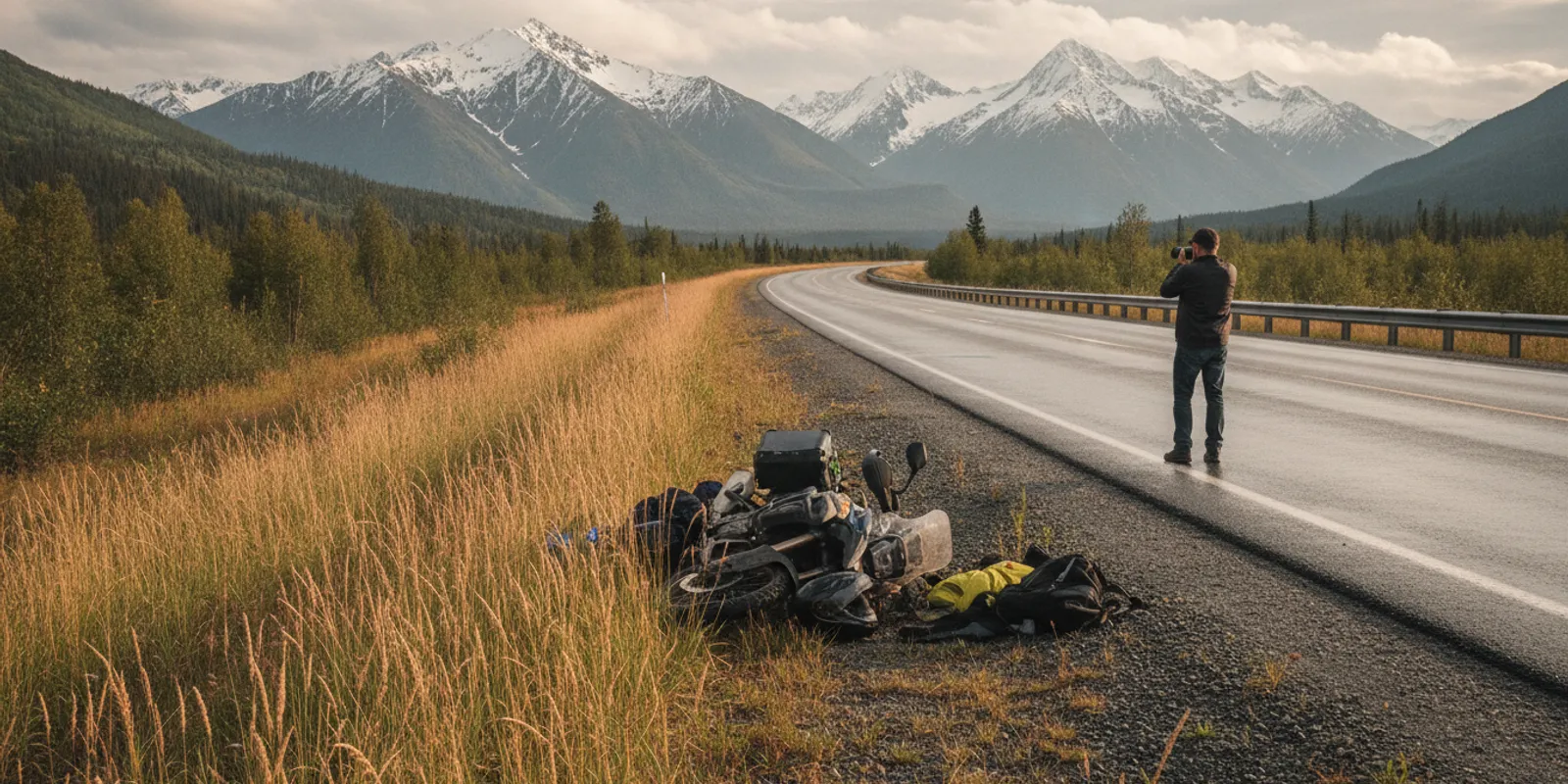
After a motorcycle crash, an injured rider may be juggling medical appointments, repair questions, and insurer calls. Motorcycle accident attorneys can help explain how evidence, fault, and documented losses may affect an Alaska injury claim. Start with safety and care, then build a clear record of what happened and what has changed.
Schedule a free consultation. There is no upfront attorney fee; fees are collected only from a successful recovery.
Why start with safety and medical care?
If anyone may be hurt, request emergency help and move out of danger if it is safe to do so. Get evaluated by a medical professional, even if symptoms seem manageable. Some injuries are not obvious at the scene. Follow the care plan your clinicians recommend and tell them accurately what you are experiencing. Do not delay or change treatment to strengthen a claim; your health comes first.
When you can safely make notes, record the date, approximate time, location, direction of travel, weather, road surface, lighting, and your recollection of the sequence. Note what you personally observed and mark any uncertain details as uncertain. Do not return to a dangerous roadway or stand in traffic to take photographs.
For a broader crash-response checklist, see this guide to what to do after an Alaska crash. Many steps overlap, while motorcycle crashes may call for specific attention to protective gear, bike damage, and the rider’s position.
What should a rider document about the crash?
Good documentation preserves context, not just damage. If it is safe and permitted, take wide photographs showing the roadway and where the vehicles came to rest. Then take closer pictures of motorcycle damage, other vehicles, visible marks, debris, traffic signs, signals, sight lines, and any hazard you observed. Include lighting and weather as they appeared at the time. Keep the original files, and make a note of when and where each was taken.
For example, a close-up of gravel may show the material but not where it was in relation to the bike. A wide image can show that relationship. If the hazard is later cleared, the wide view and your dated notes may help preserve what you saw. Do not move objects or recreate the scene for a photograph.
- Write down names and contact details for witnesses, along with a brief note of what each said they saw. Do not coach anyone or fill in details for them.
- Save report or incident numbers, driver and insurer information, and any exchange documents.
- Keep the helmet, jacket, gloves, and damaged motorcycle parts in their post-crash condition if practical. Photograph them before any repair or cleaning.
- Save relevant messages, photos, receipts, and insurer letters in one place, with backups where possible.
- Make a separate personal account while memory is fresh. Distinguish what you saw from what someone later told you.
Alaska conditions can change quickly. Record rain, ice, gravel, construction, visibility, or road damage only if you observed it. Avoid conclusions about fault in your notes. A factual record is more useful than a guess about why the collision occurred.
How can you preserve the motorcycle and riding gear?
A damaged motorcycle may contain details that photographs alone do not show. Before repairs, document the damage from several angles and save estimates, invoices, and any written description of work performed. If a shop replaces parts, ask whether the old parts can be retained. Do not delay necessary repairs that protect safety or prevent further damage; instead, document the condition as well as you reasonably can and keep the paperwork.
Protective gear also tells part of the story of the impact. Keep the helmet and clothing if practical, and photograph visible damage, torn seams, or scuffs. Avoid washing, altering, or discarding them before documenting their condition. If space or safety makes retention difficult, make detailed photographs and notes and ask an attorney what other preservation steps may be appropriate.
Use a simple inventory so that records do not become mixed together:
| Item or record | What to preserve | Practical next step |
|---|---|---|
| Motorcycle | Wide and close photos, repair estimates, invoices, replaced-part details | Record the shop’s dates and keep copies of all work orders |
| Helmet and gear | Photos of scratches, cracks, tears, and post-crash condition | Store items safely without altering them if practical |
| Scene | Road layout, marks, signs, visibility, debris, weather | Label original images with date, place, and photographer |
| Medical care | Visit dates, bills, instructions, symptoms reported | Keep documents in date order and follow care instructions |
| Work and expenses | Missed days, wage records, travel receipts, out-of-pocket costs | Keep a running log and attach receipts |
How should you organize injury and expense records?
Create a timeline with the crash date, symptoms, appointments, work absences, and major communications. A weekly note can capture changes in pain, mobility, sleep, or daily activities without turning into a diary of speculation. Keep it truthful and brief. If symptoms change, report that to your care provider and note when the change occurred.
Save bills, appointment summaries, prescriptions, receipts for travel to care, repair estimates, and proof of missed work. If a bill is revised or a record corrected, retain the earlier version when available and note the update. This helps distinguish a new charge from a duplicate or correction. Do not assume every expense will be recoverable; keep records so the issue can be evaluated.
A practical folder system might have separate sections for scene evidence, medical care, work and daily impact, motorcycle and gear, and insurance communications. Use dates in file names when possible. For instance, “2026-11-10-clinic-visit” is easier to place in sequence than “new document.” Keep a backup that is not stored only on a damaged phone.
What should you do when an insurer contacts you?
Ask who is calling, which party or claim the person represents, and what information they want. Write down the date, name, phone number, claim number, request, and any deadline stated. Keep copies of documents you send. If you do not understand a request, ask for it in writing and take time to consider it.
Avoid guessing about speed, distance, or timing when you are unsure. You can say you do not know or do not remember. Do not sign a release or accept a settlement before understanding what claims it covers and whether it affects unresolved medical or other issues. If an insurer asks for a recorded statement, consider getting legal advice about the request before agreeing. These are general precautions, not a rule that every request has the same effect.
Keep each claim’s correspondence separate if more than one insurer is involved. Label the sender and claim number, and make a short note of what was requested and when you responded. This prevents a document for one claim from being mistakenly treated as part of another.
What might motorcycle accident attorneys evaluate?
An attorney may ask how the crash occurred, what evidence exists, what injuries and care have been documented, and which insurance policies may apply. They may also consider whether physical evidence, vehicle records, or witness information needs to be preserved or requested. The answer depends on the facts. A consultation is an opportunity to ask questions, not a promise of a particular result.
Prepare a concise account with the date and location, a sequence of events, the parties involved, report details if available, current medical care, and any insurer requests. Bring or share the records you already have. You do not need a perfect file. Tell the attorney what is missing, such as a report number or witness contact, rather than delaying a discussion until every document is found.
The Law Office of Jason Skala, LLC focuses exclusively on serious personal injury and wrongful death matters. Attorney Jason Skala has more than 20 years of personal injury experience, a family background in medicine, and lifelong Alaskan roots. The firm handles serious injury claims across Alaska from its Anchorage office. Learn more about the firm’s personal injury practice and Attorney Jason Skala. Whether the firm can assist depends on the specific matter and requires agreement to representation.
Which questions can help you choose legal help?
Look for direct answers about who will handle the matter, how communication works, and what decisions remain yours. You may ask:
- Do you handle motorcycle injury claims involving serious injuries?
- Who will be responsible for my case and how can I reach that person during business hours?
- What evidence should I preserve now, and should any item be inspected before repair?
- What records would help you understand my injuries and losses?
- How do attorney fees work, and how are case costs handled?
- What decisions might I need to make, and what steps could follow an initial review?
The firm’s contingency-fee model means there are no upfront attorney fees, and attorney fees are taken only from a successful recovery. Ask for the written fee and cost terms before signing. The firm’s stated business hours are Monday through Friday, 9:00 AM to 5:00 PM Alaska Time; do not assume around-the-clock availability.
What mistakes can make a claim harder to assess?
- Putting off medical evaluation or skipping follow-up without discussing the reason with a clinician.
- Repairing or discarding the motorcycle or gear before documenting its condition, when preservation is practical.
- Posting speculation or sensitive details publicly before you have a clear record.
- Failing to save insurer messages, bills, receipts, or repair paperwork.
- Guessing when asked for facts you cannot remember, instead of saying so.
- Assuming an early settlement accounts for future care or unresolved issues without reviewing its terms.
- Editing original photos or notes without keeping the original version.
One mistake does not automatically determine a claim. Circumstances matter. If you made an inaccurate statement or a record is missing, explain that honestly when seeking advice rather than trying to reconstruct or change it.
Frequently asked questions
When should I contact motorcycle accident attorneys?
Once you are safe and urgent medical needs are addressed, you can ask an attorney about evidence preservation and insurer requests. You do not have to wait until treatment ends or all records arrive. If you are unsure whether a deadline may apply, ask promptly rather than relying on a general estimate.
Do I need a police report before speaking with a lawyer?
No. Share the report number or a copy if you have one. If you do not, explain what you know about whether an officer responded. An attorney can discuss what information may be available and what steps may be useful.
Should I repair my motorcycle right away?
Safety and preventing further damage matter. Photograph the bike and get written estimates before repairs when practical. Keep work orders and ask whether replaced parts can be retained. If repair cannot wait, document what you reasonably can without putting yourself at risk.
Does a free consultation mean I have hired the firm?
No. A consultation lets you describe the situation and ask questions. Representation begins only if both sides agree and complete the required written arrangements.
Can an attorney guarantee compensation?
No particular result can be promised. Whether a claim can be pursued and what recovery may be available depend on evidence, applicable law, insurance, and the facts.
What is a sensible next step?
For a legal starting point on Alaska road use, the Alaska Legislature publishes state statutes; review the official Title 28 motor vehicle and traffic laws. Those statutes are one source of rules for roadway conduct; the application to a specific crash depends on the facts and should not be assumed from a general article.
If you were seriously injured, keep receiving appropriate care, organize your records, and ask questions before making significant claim decisions. The Law Office of Jason Skala, LLC offers a free initial consultation and charges no upfront attorney fees; attorney fees are collected only from a successful recovery. Request a free consultation or call 907-569-6633 during Monday through Friday, 9:00 AM to 5:00 PM Alaska Time.
Request a free consultation. There is no upfront attorney fee; fees are collected only from a successful recovery.
A careful record of what happened and how the injury affects you can help make an initial discussion clearer and identify what information may still need to be gathered.