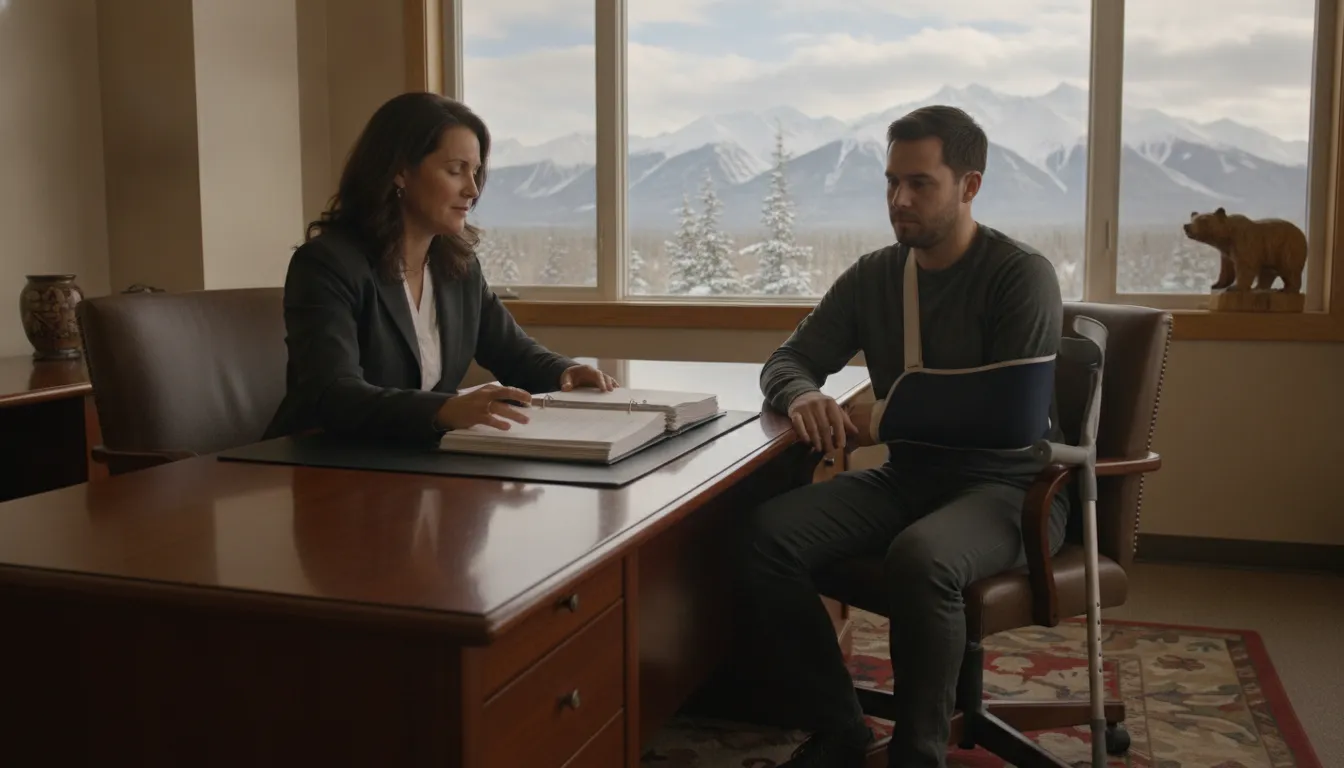
When an insurer delays your claim, questions who caused the crash, requests a recorded statement, or pushes a quick settlement, the pressure can feel overwhelming. You may still be dealing with medical care, vehicle damage, and missed work while trying to protect your rights.
An anchorage car accident lawyer can help you evaluate the insurer’s position, preserve important evidence, and pursue the compensation supported by your injuries and losses. Alaska car accident claims may involve disputed fault, incomplete records, or settlement offers made before the full impact of an injury is clear.
The right response depends on what happened, what evidence exists, and how the insurance company is handling the claim. Start by understanding the role an attorney can play when communications and negotiations become difficult, including how that support fits into the Alaska car accident settlement process.
What an Anchorage Car Accident Lawyer Actually Does for You
When an insurer disputes responsibility for an Anchorage crash, legal representation is not just about sending a demand letter. Counsel helps protect the evidence and decisions that can shape your claim before the facts become harder to prove.
Alaska generally follows an at-fault framework. That means the driver whose negligence caused the collision may be responsible for resulting losses. But disputes often center on what happened, who contributed to it, and how serious the injuries are. An attorney can investigate negligent, distracted, impaired, hit-and-run, and multi-vehicle collisions while building a claim around the available proof.
Preserving evidence and establishing fault
Your lawyer can gather and organize crash reports, photographs, vehicle damage records, medical records, witness information, surveillance, phone or employment records when relevant, and communications with the insurer. The goal is to connect the collision to the injuries and losses, not simply collect paperwork. Alaska uses comparative fault, so the other side may argue that your actions contributed to the crash. Counsel can analyze those allegations and present evidence addressing them.
Handling the insurer and documenting losses
Adjusters may request a recorded statement, question treatment, or present an early settlement before the full impact of an injury is known. An attorney can manage those communications, identify statements that need clarification, and help document medical care. Anticipated treatment, lost income, reduced earning capacity, vehicle damage, pain, and mental anguish. This does not guarantee a particular result, but it can reduce the risk that an incomplete record controls the claim.
Choosing the appropriate claim route
Depending on the facts and available coverage, the case may involve a claim with your own insurer, a third-party claim against the at-fault driver, or a civil lawsuit. Uninsured or underinsured motorist coverage, multiple responsible parties, and the severity of the injuries can affect that decision. The Law Office of Jason Skala, LLC focuses exclusively on serious personal injury and wrongful death cases. You can review the firm’s car accident legal guidance to understand the types of Alaska claims it handles and the questions to raise about your situation.
How Insurance Companies Fight Claims in Alaska
After a crash, an insurance adjuster may sound helpful while building a record that limits what the insurer will pay. The pressure can start before you know the full extent of your injuries. Alaska’s Division of Insurance advises claimants to keep copies of claim paperwork, record insurer contacts, and follow verbal notice with written notice. Those simple steps can make it easier to track what was said and what remains unresolved.
Recorded statements and fault disputes
An adjuster may ask for a recorded statement about the collision, your symptoms, or what you remember immediately afterward. Do not guess, speculate, or minimize an injury simply because it seemed minor at the scene. You can provide accurate information, but consider getting advice before giving a recorded statement to another driver’s insurer.
Insurers may also argue that you caused the crash or that another driver’s conduct was not the primary cause. Alaska is an at-fault state, and its comparative-negligence rules can reduce damages in proportion to an injured person’s share of fault. That makes photos, the crash report, witness information, vehicle-damage evidence, and consistent medical records especially important. Preserve these materials rather than relying on memory alone.
Treatment gaps, social media, and early offers
A gap in medical care can be used to argue that an injury resolved, was unrelated to the crash, or was less serious than reported. Follow your provider’s instructions and explain barriers to treatment promptly. Keep bills, appointment records, work-loss documentation, and notes about how symptoms affect daily activities. Avoid posting about the crash, your health, or activities that could be taken out of context on social media. Adjust your privacy settings, but do not delete existing material without legal guidance.
A quick settlement offer may arrive before doctors can evaluate future care, lost income, or the lasting effect of an injury. Do not sign a release or accept an offer simply because you need immediate funds. Compare the proposal with the documented losses and the evidence still being developed. For a broader overview, review the Alaska car accident settlement process.
Practical responses when a claim is challenged
- Keep a dated log of calls, emails, requests, and the adjuster’s name.
- Save the police report, photographs, medical records, receipts, wage information, and insurer letters in one place.
- Ask for claim decisions, valuation explanations, and requests for additional information in writing.
- Do not speculate about fault, promise a recovery, or sign a release before understanding its effect.
Alaska generally sets timelines for claim acknowledgment and investigation, but a delay or disagreement does not by itself establish a legal violation. The facts, policy language, and claim history matter. An Anchorage car accident lawyer can review the evidence and explain the available next step without promising a particular result.
What Your Case May Be Worth Under Alaska Law
No formula can predict what an individual crash claim may recover. The value depends on the injuries, the evidence connecting them to the collision, available insurance, your losses, and any dispute about fault. A useful first step is to organize the categories below and preserve records that support each one. You can also review these factors that affect claim value for additional context.
| Loss category | What it can include | Documentation |
|---|---|---|
| Medical expenses and future care | Emergency treatment, follow-up visits, medication, therapy, and reasonably supported future medical needs. | Medical records, bills, prescriptions, treatment plans, and provider opinions about ongoing care. |
| Lost wages and earning capacity | Income missed during recovery and, when supported by the injury, reduced ability to earn in the future. | Pay stubs, tax records, employer statements, attendance records, and vocational or medical evidence. |
| Property damage | Vehicle repairs or loss, towing, rental transportation, and other collision-related property losses. | Photos, repair estimates, valuation reports, invoices, receipts, and insurance correspondence. |
| Pain and suffering | Physical pain, limitations, inconvenience, and the effect of the injury on ordinary activities. | Treatment records, symptom journals, testimony from people who observe your recovery, and activity records. |
| Mental anguish | Emotional distress or psychological effects associated with the crash and resulting injuries. | Medical or counseling records, prescribed treatment, personal notes, and witness accounts where appropriate. |
Alaska follows a fault-based system, and comparative fault can reduce damages in proportion to the injured person’s share of responsibility. That makes crash evidence, medical history, and a careful account of what happened important when liability is disputed.
Insurance limits can also affect what is practically available. Alaska’s Department of Motor Vehicles identifies minimum liability limits of $50,000 per person and $100,000 per accident for bodily injury or death, plus $25,000 for property damage. These are minimum policy limits, not a prediction of your claim’s value or a ceiling in every case. Coverage may differ, and additional policies may matter. Alaska DMV insurance requirements provide the official minimum-limit information.
When to Call a Lawyer After a Crash in Anchorage
You do not need to wait for an insurer to deny your claim before getting advice. After a serious crash, early guidance can help preserve evidence, protect your account of what happened, and identify deadlines that may apply to your injury or property-damage claim. These steps can help you organize what happens next:
- Get medical care and follow the treatment plan. Seek prompt evaluation for any injury, including symptoms that develop after the collision. Keep discharge instructions, test results, prescriptions, invoices, and notes about how symptoms affect work and daily activities. Do not minimize an injury simply because you felt able to leave the scene.
- Report the crash and preserve evidence. Follow the applicable reporting requirements for the collision. Save the crash report, photographs, videos, witness information, vehicle-damage records, and relevant messages. Do not repair or dispose of damaged items before documenting them, when it is safe to preserve them.
- Be careful with insurer communications. Notify your insurer and ask what forms or documents it needs, but do not guess about fault. Speculate about future recovery, or accept a recorded statement without understanding the consequences. Keep a written log of each contact, including the adjuster’s name, date, and topics discussed. The Alaska Division of Insurance also recommends following verbal notice with written notice and keeping copies of claim paperwork. Learn more about the Alaska car accident settlement process.
- Gather records that show the full impact. Keep medical bills, wage-loss information, employer records, repair estimates, receipts, and correspondence in one file. A complete record can help counsel evaluate medical care, lost income, property damage, and other potential losses without relying on memory alone.
- Request a prompt case review when the claim is disputed or serious. Consider speaking with an anchorage car accident lawyer if the adjuster blames you, pressures you to settle quickly, disputes your treatment, delays the investigation, or asks you to sign a broad release. Alaska materials commonly identify two years for personal-injury claims and six years for property-damage claims, but deadlines can vary based on the facts, parties, and claim type. Have a lawyer review the timeline for your specific case rather than relying on a general figure. If you are concerned about cost, review how car accident lawyer fees work.
Why Exclusive Personal Injury Focus Matters
A serious crash can leave you managing medical records, missed work, vehicle damage, and difficult conversations with an insurance adjuster at the same time. The value of focused representation is not that other attorneys lack legal skill. It is that a lawyer who works exclusively on personal injury cases spends the practice studying the issues that arise repeatedly in injury claims. Including how medical evidence, fault, insurance coverage, and long-term harm fit together.
For an Anchorage crash victim. That focus can help keep the claim centered on the full effect of the injury rather than only the first bills or the visible vehicle damage. A careful review may need to account for ongoing treatment, future care, lost income, diminished earning capacity, pain, and mental anguish. Those issues require a factual record, not a promise about what any particular claim will recover.
Experience with medical records and injury evidence
Attorney Jason Skala has more than 20 years of experience focused exclusively on personal injury. The firm reports recovering more than 40 million dollars for clients. His family background in medicine also gives him familiarity with medical terminology and complex records. That does not replace treating providers or guarantee an outcome. It can, however, support a more informed review of how a crash, diagnosis, treatment plan, and claimed losses relate to one another.
You can learn about Attorney Jason Skala and his background before deciding whether to discuss your circumstances with the firm.
Alaska context and a practical fee model
A serious injury claim also unfolds in a specific Alaska context. Local experience can help a lawyer understand the communities, roads, medical access challenges, and insurance issues that may affect an injured person across the state. The Law Office of Jason Skala, LLC represents clients throughout Alaska while maintaining its Anchorage base and personal-injury focus.
The firm uses a contingency-fee model. Clients do not pay upfront attorney fees, and attorney fees are taken only from a successful recovery. That arrangement can allow an injured person to request a case review without paying a retainer at the outset. The terms of any representation should still be explained clearly before you sign an agreement. You Don’t Pay. They Do.
Frequently Asked Questions
Is Alaska a no-fault state for car accidents?
No. Alaska generally follows an at-fault system, so the driver responsible for causing the crash may be financially responsible for resulting injuries, vehicle damage, and other losses. Depending on the facts and available coverage, an injured person may pursue a claim with their own insurer. A third-party claim against the at-fault driver’s insurer, or a civil lawsuit. Fault disputes can affect the outcome, so avoid assuming an adjuster’s version is final.
What should I do if the other driver leaves the scene?
Report the crash, seek medical care, preserve photographs and other evidence, and notify your insurer promptly. Coverage for injuries or vehicle damage after a hit-and-run depends on the policies involved, including any uninsured-motorist or collision coverage. Review your policy and keep copies of claim documents. Alaska’s Division of Insurance recommends contacting your agent or insurer as soon as possible and asking which documents are required: Alaska Division of Insurance guidance.
How much does a car accident lawyer cost in Alaska?
Many personal injury lawyers, including The Law Office of Jason Skala, LLC, handle qualifying cases on a contingency-fee basis. That means there are no upfront attorney fees, and the attorney fee is taken as a percentage of a successful recovery. Ask for a clear explanation of the fee agreement and any case expenses before signing. Every case should be evaluated individually.
Can I recover compensation if I was partly at fault?
Possibly. Alaska uses comparative fault principles, which can reduce a recovery in proportion to the injured person’s share of responsibility. The evidence may include crash reports, photographs, witness accounts, medical records, and vehicle data. Do not concede fault in a recorded statement before understanding the facts and your legal options.
How long do I have to bring a car accident claim?
Deadlines vary by claim type and circumstances. The firm’s Alaska guidance lists two years for personal injury claims and six years for property-damage claims, but exceptions may apply. Get case-specific advice promptly, especially if an insurer is delaying the investigation or pressing for a quick settlement.
Schedule a Free Consultation
If an insurance company is delaying, disputing, or undervaluing your car accident claim, a confidential review can help you understand your options and the next step. The Law Office of Jason Skala, LLC offers free consultations with no upfront attorney fees. To request a free consultation, contact us online during regular business hours, Monday through Friday, 9:00 AM to 5:00 PM Alaska Time.